Can a single tool make your parts fit better, cut scrap, and speed time to market? Lowrance Machine is a Texas partner that delivers production-ready results for plastic parts and finished products. Our team works from prototype to production, offering planning, tooling coordination, molding support, and guidance to keep cost and manufacturability on track.
This Site is About Machining Services in Dallas
We serve U.S. manufacturers and product teams who need repeatable quality, predictable timelines, and tight tolerances. Precision matters because it affects part fit, cosmetic finish, dimensional stability, and scrap rate.
Modern projects often call for flexible materials and processes like insert molding and overmolding to meet real-world performance needs. Lowrance Machine emphasizes clear communication, reliable outcomes, and customer-focused support across our facility and processes.
On this page you’ll find capabilities from prototype to production, design and engineering help, material options, specialized processes, QC practices, and lead-time expectations. Ready to move forward? Share your part files and requirements or request a quote from Lowrance Machine today.
Main Takeaways
- Lowrance Machine provides turnkey tooling and molding support for dependable production.
- Precision supports better fit, cleaner finish, and lower scrap rates.
- Insert molding and overmolding address complex product requirements.
- Clear communication and strict quality standards guide every project.
- This page reviews prototype-to-production support, materials, processes, and expected lead times.
Precision Mold Services In Dallas For Plastic Parts And Finished Products
Precision at Lowrance Machine means tighter tolerances, steady cycle-to-cycle output, and fewer assembly issues for parts and components.
We apply DFM principles—proper draft angles, uniform wall thickness, and smart gate placement—to reduce warpage, sink, and cosmetic blemishes. These mold design choices improve quality control and lower scrap rates.
Typical project inputs that drive success include part geometry, resin selection, expected volumes, packaging constraints, and end-use requirements. Lowrance Machine pairs these inputs with injection and injection molding processes for repeatable, high-volume plastics manufacturing.
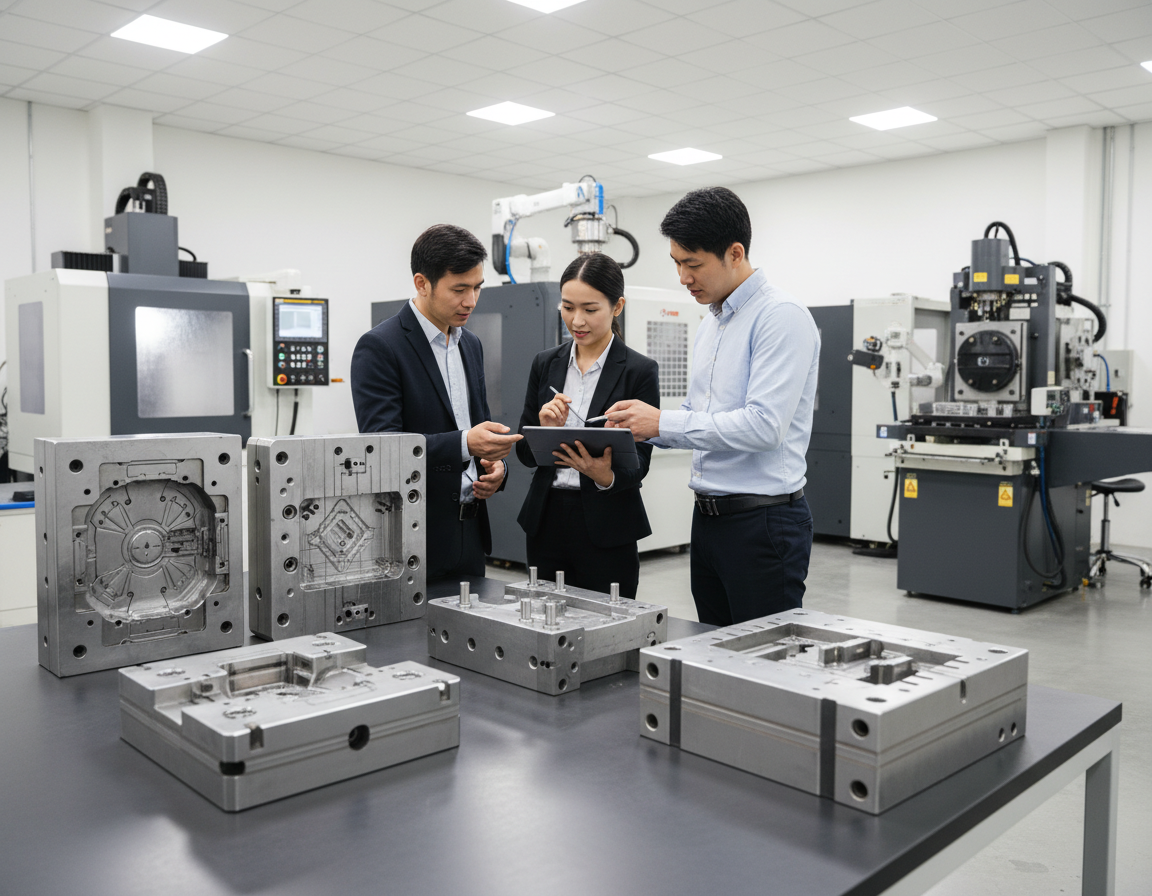
- Definition of precision: consistent output with tighter tolerances
- Industries served: automotive and electronics production lines
- Outcomes: better cosmetics, reliable function, fewer reworks
| Priority | Engineering Action | Benefit |
|---|---|---|
| Part draft | Add proper taper for ejection | Reduce part damage |
| Part wall thickness | Maintain even sections | Less warpage |
| Flow gate location | Improve material flow | Better cosmetic finish |
Choosing a precision-first approach reduces overall cost by cutting scrap, rework, and delays tied to unstable molding conditions. Share your requirements—part drawings, material preferences, and expected annual volumes—to start a practical conversation with Lowrance Machine.
Production-Focused Custom Mold Capabilities From Prototype To Full Runs
We build tooling roadmaps that take a part from validation to high-volume output with predictable results. Lowrance Machine guides product and engineering teams through prototype checks, bridge production, and full production runs so you can scale without reinventing strategy.
Our cavity strategy balances learning and efficiency. Single-cavity molds work for early validation while multi-cavity molds (up to 64 cavities) lower unit costs for steady production. Tooling choices — steel for long life or aluminum for fast turns — shape expected cycle counts and maintenance plans.
Typical planning separates tooling time (about 8–10 weeks) from production lead times (often 2–3 weeks once molds are ready). We match equipment to part envelope, clamp force, and shot size to keep process windows stable and efficiency high.
| Phase | Main Focus | Typical Lead Time |
|---|---|---|
| Validation stage | Testing and validation | 2–4 weeks |
| Bridge production | Limited runs with tooling tweaks | Roughly 2–12 weeks |
| Production run | Steady multi-cavity output | As required |
Prepare CAD files, material targets, cosmetic notes, test plans, and volume forecasts to accelerate your project. We provide clear communication, realistic timelines, and tooling paths aligned with your production goals and product needs.
Mold Design And Engineering Support That Reduces Risk And Improves Quality
Early design reviews at Lowrance Machine catch costly issues before tooling starts. Our team looks for common DFM risks: insufficient draft, uneven walls, unnecessary undercuts, and poor gate placement.
We recommend parting line and ejector pin layouts that protect visible surfaces and cut post-processing. These choices reduce cycles spent on rework and improve assembly fit.
Material selection ties directly to mold design. Resin shrink, flow, and temperature sensitivity shape gate size, runner balance, and cooling layout. We validate candidates with supplier data and test runs.
Injection planning (fill, pack, cool, eject) starts early. That reduces surprises at first articles and shortens ramp-up to production.
| Design Risk | Recommended Action | Benefit |
|---|---|---|
| Undercuts | Redesign or use lifters only when required | Reduced tool cost and easier maintenance |
| Wall thickness | Use even sections and ribs | Lower warpage with fewer sink marks |
| Gate & ejector placement | Optimize placement for flow and appearance | Improved finish and easier assembly |
How customers get best results: submit drawings, CTQ dimensions, performance targets, and any compliance or equipment requirements. Lowrance Machine acts as a solutions partner—guiding engineering choices that improve the finished product, not just the tooling.
Modern Plastics Manufacturing Materials And Resin Options
Lowrance Machine starts by aligning resin families with your product goals, then fine-tunes molding and tool details.
We help teams pick materials that balance cost, manufacturability, and long-term performance for plastic products and components.
- Polyethylene & polypropylene — versatile, cost-effective for packaging and general parts.
- ABS — strong toughness with a good surface finish for consumer parts.
- Nylon — strong wear resistance for functional parts.
- Polycarbonate and acrylic — impact strength and optical clarity when required.
- Polyester & styrene-based materials — used for durability or special properties.
We support virgin and recycled plastics when performance allows. Re-processed options reduce waste but need verification for consistent results.
| Resin | Performance | Common Use |
|---|---|---|
| Polypropylene/Polyethylene | Medium | Packaging, housings |
| ABS resin | Good | Consumer products |
| Nylon and PC | High | Structural and high-heat components |
| PMMA / Styrene-based grades | Variable | Optical and specialty uses |
Resin choice affects gating, venting, cooling and how molds run. For regulated devices, we verify grades, supply documentation, and plan for cleanliness.
- Define the environment, loading conditions, and cosmetic needs
- Verify compliance requirements and production volume
- Match the material and molding method with Lowrance Machine
Specialized Molding Processes For Industry-Specific Needs
Process selection is where product goals meet manufacturing reality — and the right choice saves time and scrap.
Lowrance Machine helps match molding and forming options to industry requirements, balancing performance, cost, and production goals. We recommend processes that meet automotive, electronics, packaging, and device needs.
Overmolding applies a soft or durable layer over a substrate to add ergonomics, noise control, or grip. Insert molding places metal or preformed parts into the tool for a single-run assembly. Both require careful material compatibility checks for adhesion and durability.
- Typical results include soft-grip handles, tactile buttons, and sealed multi-material assemblies used in consumer goods and devices.
- Medical projects require tighter controls, stronger documentation, and often FDA-compliant or antimicrobial resin options.
| Molding Process | Best Use | Why It Works |
|---|---|---|
| Overmolding | Ergonomics, durability | Soft-touch surfaces, vibration damping |
| Insert molding | Assemblies using inserts or fasteners | Fewer operations with one-step assemblies |
| Thermoforming | Packaging and tray applications | Reduced tooling cost and faster turnaround |
Metal replacement molding uses engineered plastic to reduce weight, resist corrosion, and cut secondary machining. Choosing the right process early improves yield and reduces redesign late in the program.
Next move: share end-use environment, industry constraints, and packaging expectations so Lowrance Machine can recommend the best-fit process and tooling approach.
Quality Control, Equipment, And Lead Times You Can Plan Around
Well-documented checks and the right machines keep parts consistent from first shots to full runs. Quality control at Lowrance Machine starts with defined requirements, documented inspections, and routine review of critical dimensions and cosmetic standards.
First-article documentation confirms the tool, process settings, and part measurements before production continues. That report records sample measurements, machine parameters, and any adjustments needed to meet design requirements.
Equipment selection—clamp force, shot size, and process monitoring—supports precision and repeatability. Choosing the proper machine reduces variation for tighter-tolerance plastic parts and improves injection molding stability.
- Plan tooling time ~8–10 weeks; production runs often start 2–3 weeks after molds are ready.
- Expect timelines to change with part complexity, cavity count, and resin choice.
- Communicate packaging needs early to protect appearance and ensure proper tray or clamshell fit.
| Capability | Range | Why It Matters |
|---|---|---|
| Clamp force | 50–1,000 tons | Matches part size and precision |
| Part size / area | Up to ~5 lbs / ~480 in² | Helps define machine choice and runner strategy |
| Component thickness | Up to ~0.250 in | Affects cooling and cycle time |
Stable processes cut downtime, scrap, and unplanned maintenance, which improves on-time delivery and overall efficiency. Communicate target delivery dates and packaging constraints early so Lowrance Machine can align a timeline and QC plan to your project requirements.
Request a confirmed timeline and inspection plan for your project to lock in tooling milestones and production delivery dates.
Conclusion
Choose a manufacturer that turns engineering intent into repeatable production with clear timelines and data-backed quality checks.
Lowrance Machine provides focused services that prioritize predictable outcomes, practical guidance, and consistent quality for plastic parts and finished products. We align molds, materials, and process planning to reduce risk and speed time to delivery.
Good quality control and first-article documentation protect schedules and help customers scale with confidence. Specialized approaches — like insert molding, overmolding, or thermoforming for packaging — are available when the application requires a tailored solution.
Share your product goals, part files, and component requirements so Lowrance Machine can recommend the best path forward. Contact Lowrance Machine to request a quote and plan your next production run with confidence.