Categories
Manufacturing

CNC And Manual Machining Services By Lowrance Machine

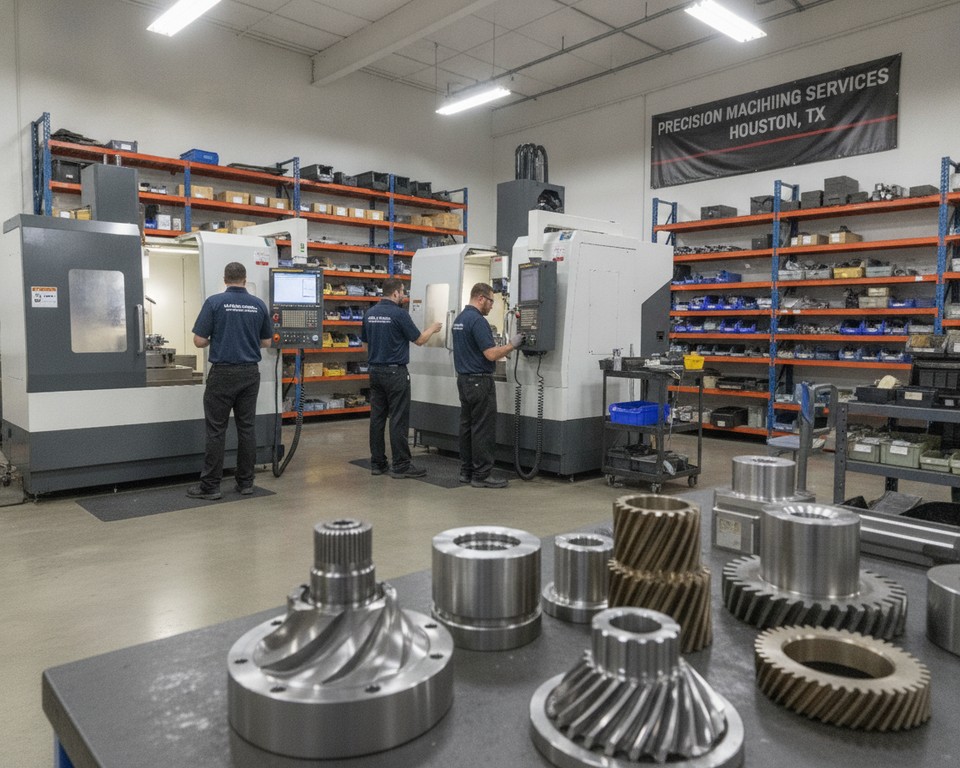
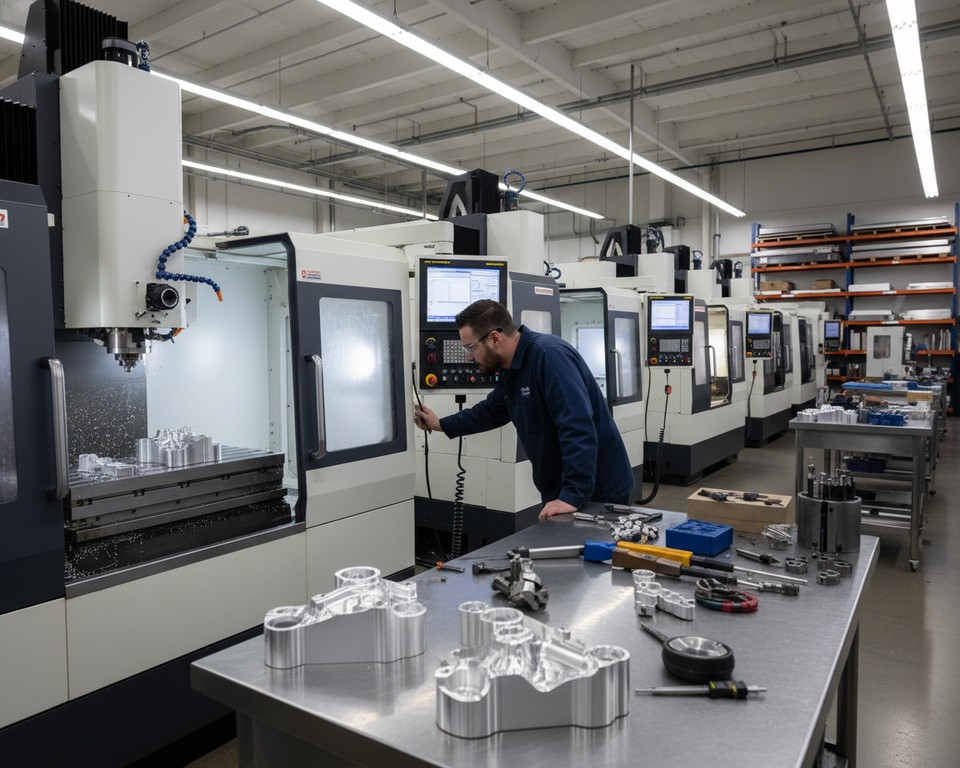
From prototype through full production, High-Precision Manufacturing With CNC offers exceptional accuracy. Shops such as Leech Industries and High Tech Quality Manufacturing reflect how advanced CNC machining services can work in close harmony. They use 5-axis mills, Swiss machines, wire EDM, and stringent quality systems to achieve precise tolerances.

Visit Lowrance Machine Machining Services
Manufacturers recognize the value of precision CNC machining, which minimizes variability, lowers rework, and enhances customer satisfaction. Modern capabilities include high-speed spindles up to 20,000 RPM, extensive tool magazines, multi-axis control up to nine axes, and precision within the +/- .0002″ range.

When U.S. clients need reliable CNC machining solutions, Lowrance Machine stands as a trusted partner. Their operations align with industry benchmarks, including swift CNC prototyping, ISO-compliant quality controls, and the ability to handle both single prototypes and large-scale production.

Key Takeaways

  • High-Precision Manufacturing With CNC links prototyping to scalable production by using advanced machine tools.
  • Comprehensive CNC machining services include milling, turning, 5-axis, Swiss, and EDM processes.
  • By producing consistent, tight tolerances, precision CNC machining improves yield and customer confidence.
  • Today’s CNC machining solutions allow for hard milling, high spindle speeds, and large work envelopes.
  • Lowrance Machine remains a qualified U.S. partner for high-precision projects executed to industry standards.

Overview Of High-Precision Manufacturing With CNC

Advanced machine tools, stringent process control, and modern CAD/CAM systems are integrated in high-precision manufacturing with CNC. The result is a process that moves parts from concept to repeatable production with speed while still meeting strict tolerances and traceability standards.

Defining CNC Integration In High-Precision Manufacturing

The focus of high-precision manufacturing is consistent results, superior surface finish, and precise dimensional control. Using milling, turning, and multi-axis strategies, CNC machining can hold tolerances as close as +/- .0002″. CAD/CAM programmers build validated toolpaths so machines from brands like Haas, DMG MORI, and Mazak maintain consistent results.

Why CNC Precision Matters Across Major Industries

Precise fits are critical in aerospace because both safety and performance depend on them. Medical implants require traceable processes and ISO 13485 compliance to support patient safety. Automotive components need consistent geometry for long service life, and electronics need precise form factors to maintain signal integrity. In each of these industries, CNC precision engineering lowers risk and supports certification.

Lowrance Machine CNC And Manual Machining Services

Reducing Variability Through CNC

Human error is greatly reduced by computer control, repeatable toolpaths, and automated tool changes. Before full production begins, rapid CNC prototyping verifies CAD models and limits rework. Consistency is supported through quality assurance tools like CMM inspection and statistical process control. That consistency strengthens customer confidence and brand trust.

Lowrance Machine follows these methods to control variability and meet industry standards. Its commitment to high-accuracy manufacturing, finishing operations, and traceable marking supports dependable components for aerospace, medical, automotive, and electronics customers.

Capabilities In CNC Machining Services

Lowrance Machine delivers a broad range of CNC machining services, from simple prototypes to complex production runs. The shop combines traditional milling and turning with advanced cells to support aerospace, medical, and industrial work. As a result, customers can access CNC machining solutions better aligned with their specific project requirements.

CNC milling, turning, drilling, and boring are all part of the available service mix. By using 5-axis machining, shops can approach intricate work from several angles in one setup. High-speed spindles up to 20,000 RPM and tool magazines holding as many as 80 tools improve cycle efficiency.

Advanced methods make it possible for shops to tackle more demanding jobs. With multi-axis machining and 3-D high-speed milling, complex contours can be produced rapidly. For small, intricate cylindrical parts, especially in medical devices, Swiss machining is often ideal. Wire EDM and laser marking are used for fine detail and traceability, while finishing services such as heat treating, welding, and assembly complete the package.

Machine size plays a major role in determining the scope of the parts a shop can handle. In many shops, milling capacity reaches roughly 30″ x 65″, and turning centers can accommodate parts up to 26″ in diameter and 80″ long. Up to nine axes of simultaneous motion can reduce the number of setups needed in high-mix, low-volume work.

Advanced machining cells are powered by respected machine tool builders such as Mazak, Okuma, Kitamura, Grob, Haas, DMG Mori, Doosan, and Hurco. Achieving repeatable results in precision CNC machining depends heavily on choosing the right machine for each job.

Lowrance Machine aims to match that level of capability and service. The company blends skilled programmers, advanced inspection tools, and flexible machine layouts to provide CNC machining solutions that shorten lead times and manage costs. Customers benefit from streamlined workflows and single-source accountability for complex parts.

Choosing a provider should involve questions about spindle specs, tool capacity, axis count, and examples of similar work. That information helps determine whether a shop can satisfy the tolerance and surface-finish demands tied to high-precision work and multi-axis strategies.

Materials Machined With High-Accuracy Manufacturing

High-accuracy manufacturing requires the right material and the right process for every part. Material selection affects tooling, spindle speed, cutting fluid, fixturing, heat treatment, and inspection strategy. Companies such as Mazak and Haas publish capability guidance across many alloys and medical-grade plastics, which helps during both prototyping and production.

The materials most often machined fall into several families and specialty categories. Below is a table that helps engineers connect material choice with manufacturing strategy by outlining machinability notes, finishing methods, and common uses.

Family Of Material Examples Key Machining Considerations Common Uses
Copper And Aluminum Alloys 7075, 6061-T6, brass, C11000 Fast removal rates and strong finishes; tool coatings help longevity; burr formation on thin walls needs attention Electrical connectors, lightweight components, aerospace housings
Stainless And Alloy Steels 304/316, alloy steels, 17-4 PH Require rigid fixturing; control heat buildup; passivation and heat treat options available Fasteners, medical instruments, structural components
Titanium & Nickel Alloys Ti-6Al-4V, Inconel 718, Hastelloy Low thermal conductivity and work hardening call for slower feeds and robust tooling High-temperature applications, exhaust, engine components
Hardened Alloys And Tool Steels A2, D2, H13, 9Ni-4Co-0.30C Often roughed before heat treat, then finished; grinding or EDM may be used for tight features Wear parts, molds, dies
Specialty And Exotic Materials Beryllium copper, carbide, copper tungsten, Vespel Require specialized cutting strategies; accuracy depends heavily on tool geometry and coolant Vacuum components, insulating parts, high-performance electrical contacts
Graphite And Ceramics Alumina, silicon carbide, machinable graphite Brittle behavior demands slow, controlled cutting; diamond tooling is often used Semiconductor tooling, thermal components, electrodes
Plastics And Composites PEEK, PTFE, UHMW, medical-grade polymers, carbon fiber laminates Low melting points require chip evacuation and reduced speeds; delamination must be controlled in composites Implant supports, insulators, and lightweight structural components

When exotic materials are specified, early discussions with the machine shop are essential so limitations and post-process requirements can be addressed. The importance of clearly defined tolerance and finish requirements is emphasized by Lowrance Machine so tooling, cutting fluids, and secondary processes can be planned effectively. This clarity improves process planning and supports regulatory compliance.

Precision CNC machining of difficult alloys affects setup times and cycle planning. Engineers should evaluate candidate materials during prototyping to confirm dimensional stability after secondary steps. That step minimizes surprises when production is scaled using high-accuracy manufacturing.

When specifying parts, engineers should list the exact alloy or polymer grade, the target tolerance band, and any required certifications. This level of detail helps the shop optimize toolpaths, fixturing, and inspection plans. The result is a better chance that the finished material will meet performance expectations without excessive rework.

Precision CNC Machining Quality And Tolerance Standards

Clear quality and tolerance benchmarks are essential when repeatable parts are the goal. Specialized shops in precision CNC machining typically explain repeatability levels, setup methods, and machine features that support stability. Large tool carousels, pallet changers, and correctly sized machines help reduce fixture changes and limit holding-pressure variation.

Achievable Repeatability And Tolerance Levels

Contemporary machinery is capable of maintaining close tolerances provided the platform is stable and the setup is controlled. Under the right conditions, repeatability as tight as +/- 0.0002″ can be achieved. Tolerance outcomes still vary by material and operation, with milling and turning often holding critical features within a few ten-thousandths.

Inspection Methods And Quality Control

Dimensional traceability and full customer reporting are supported by CMM inspection. Statistical process control charts monitor drift and tool wear across repeated runs. Before shipment, visual checks and functional tests help confirm fit and finish. Experienced CNC machining specialists often provide inspection reports, CMM plots, and SPC data to validate each batch.

Regulatory And Certification Considerations

For medical and aerospace sectors, documented systems and compliance are mandatory rather than optional. Among the most common certifications are ISO 9001:2015, AS9100D in aerospace, and ISO 13485 in medical work. Part durability and regulatory acceptance are supported by NIST calibration, ITAR controls when required, and documented passivation or finishing steps.

Lowrance Machine and other professional shops should clearly state achievable tolerances, provide inspection evidence, and disclose certifications early. That transparency helps engineers choose the right partner for high-tolerance CNC projects and align expectations with real outcomes.

CNC Precision Engineering: From Prototype To Production

The path from CAD model to reliable production depends on structured steps and careful process control. By aligning prototyping, validation, and production, CNC precision engineering helps designers and manufacturers reach specifications faster while generating less waste.

Rapid CNC prototyping helps move model verification forward more quickly. Through CAD/CAM validation, additive support, and wire EDM when appropriate, shops can rapidly confirm fit, form, and function. The early phase helps expose geometry problems before final tooling and fixturing decisions are finalized.

One-and-done machining strategies are valuable because they can greatly reduce setup counts. Large tool carousels, pallet changers, and automated part loaders on modern machines make it possible to finish complex parts in one operation. This approach supports stronger dimensional stability while lowering handling-related errors in close-tolerance work.

One-and-done machining is often strengthened by cellular manufacturing. This method arranges machines, fixtures, and staff into cohesive units that streamline movement from prototype work into low-volume production. With proper process documentation and CAM verification, each manufacturing cell can repeatedly produce parts inside the required tolerance range.

Quick-turn solutions support urgent low-volume needs. A provider becomes especially valuable when it can turn around prototype and short-run parts quickly without sacrificing inspection documentation. Successful quick-turn projects depend on flexible scheduling, ready tooling, and clear CAD/CAM data from the start.

At Lowrance Machine, CAD/CAM verification, prototype validation, one-and-done machining, and cellular manufacturing are brought together in one workflow. The result is shorter lead times and stronger confidence that the next builds will match the intended specification.

High-Tolerance CNC Manufacturing For Complex Geometries

Complex shapes combined with strict tolerances demand advanced machines and disciplined planning. Distortion is controlled and consistency is maintained in high-tolerance CNC manufacturing through multi-axis capability and documented fixturing.

Using 5-Axis And Multi-Axis Machining For Complex Shapes

Five-axis machining lets teams reach contoured surfaces in a single operation, which cuts cycle time and reduces error. Paired with up to nine-axis equipment, this approach supports 3-D high-speed machining and tight form tolerances.

Benefits Of Using The Right-Sized Machine For Holding Pressure And Dimensional Stability

Choosing the right-sized machine for the part and the clamping method helps limit deformation while cutting. With properly sized equipment, holding pressure stays more controlled, and that matters greatly for repeatability in high-accuracy manufacturing. It is especially important in jobs where tolerances around +/- .0002″ must be maintained.

Where High-Tolerance CNC Is Most Critical

Applications such as aerospace fittings, implantable medical devices, and precision dies demand both intricate geometry and exact fit. Manufacturers often combine 5-axis machining, Swiss turning, and wire EDM to create precision components that meet these demands.

Lowrance Machine and similar suppliers document fixturing methods, program steps, and inspection points to keep high-tolerance CNC manufacturing consistent from prototype through production. This documentation supports traceability and helps reduce rework risk on critical parts.

Choosing CNC Machining Specialists And Evaluating Facilities

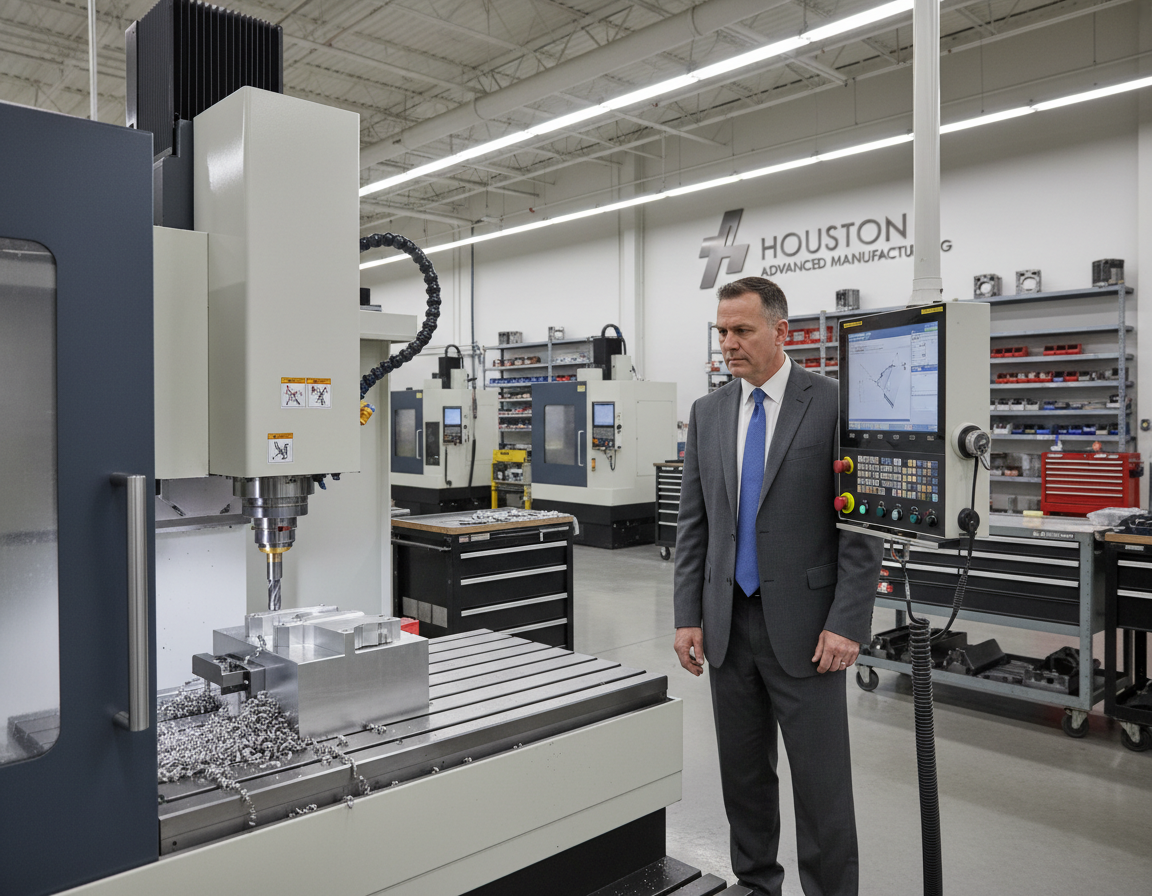
The search for a precision-work partner should begin with a detailed review of the machine shop. Rather than relying on broad marketing claims, it is important to confirm that advanced equipment from respected brands such as Mazak, Okuma, Kitamura, and Grob is actually present. The ability to reproduce strong results on comparable work matters just as much.

It is wise to ask for capability statements, prior production examples, and detailed records of prototyping and validation. This review helps reveal whether a shop is genuinely capable or simply strong in promotional language.

Personnel quality matters as much as equipment quality. It is important to ask about staff experience, certifications, and proven work in sectors such as aerospace, medical, and defense. Relevant standards such as AS9100D, ISO 9001, and NIST- or ITAR-linked traceability should be checked when required.

Cellular manufacturing is frequently the most efficient approach when workloads vary widely. It reduces idle time, supports tool life, and simplifies setup activity. Automation features like large tool magazines, pallet changers, part loaders, and bar feeders are strong signs of production readiness and consistency.

Shops that prioritize quality typically use organized inspection methods and statistical process control. CMM reports, sampling plans, and evidence of SPC use in production should be requested. First-article inspection and prototyping should be built into the workflow as standard steps. This discipline is what separates experienced CNC machining specialists from weaker competitors.

A short evaluation checklist should include certifications, CMM and SPC methods, equipment inventory, specific machine brands, and maintenance records. It is also important to request examples of quick-turn projects and plans for scaling to higher production volumes. Lowrance Machine and similar suppliers should be able to provide case studies and documentation on request.

The best partner combines capable machines, skilled people, and efficient workflow design. Priority should go to shops that can demonstrate cellular manufacturing, robust automation, and a reliable history with similar components. A careful review lowers risk and improves the chance that schedules and tolerances will be met.

Product Quality Benefits Of High-Precision Manufacturing With CNC

High-precision production changes how products perform once they are in the field. By holding tight tolerances, manufacturers reduce the likelihood of failure and build customer trust. That shows up as fewer returns, more consistent performance, and a stronger brand reputation.

How Precision Machining Drives Customer Satisfaction And Brand Trust

Product consistency begins with part consistency. Precision CNC machining reduces variation and makes it easier for final assemblies to meet specification on every build. Reliable results raise customer satisfaction and help generate repeat business.

Some studies show that 63% of consumers are prepared to spend more for better quality. Precision investment by companies such as Lowrance Machine can protect brand reputation and support long-term customer loyalty.

Cost Benefits Of Reduced Rework, Better Yields, And Faster Launches

Setup time and rework are reduced when advanced setups are paired with stable machinery. Yields improve and lead times shrink when one-and-done machining and cellular manufacturing are used effectively.

Reducing rework produces measurable savings in both production and warranty costs. Less scrap and fewer corrective actions help move new products to market faster.

Why Precision Often Beats Lower-Cost Options

In fields such as medical implants and aerospace flight hardware, precision is not optional. Dependable finishing and inspection on high-precision parts help prevent recalls and regulatory penalties.

Even when the upfront machining cost is higher, the long-term savings from fewer returns, reduced warranty claims, and less regulatory risk can make the investment worthwhile. In the long run, precision CNC machining is a strategic choice that supports durable performance and measurable savings throughout the product life cycle.

Where CNC Machining Solutions Deliver Real-World Value

Precision technology becomes practical when advanced shops apply it to real-world manufacturing demands. Many CNC machining solutions are used for parts that face harsh conditions, strict certification demands, and tight tolerance requirements. The following use cases show how machining technology meets the demands of different sectors.

Aerospace Examples

Aerospace components such as airframe fittings, engine brackets, and flight-control parts require repeatable accuracy and fatigue-resistant finishes. To satisfy AS9100D and ITAR requirements, aerospace machining often relies on high spindle speeds, hard milling, and large work envelopes. Suppliers such as Lowrance Machine support both prototype and production work with 5-axis centers that machine complex titanium and Inconel geometries.

Examples In Medical Manufacturing

Medical CNC machining supports the production of implants, surgical instruments, and diagnostic housings. ISO 13485-aligned shops maintain traceability, sterile-compatible finishes, and tight tolerances to support patient safety. Swiss machines and wire EDM are especially useful when tiny features and burr-free edges are required.

Automotive And Defense

For automotive systems, consistent interchangeability is vital in engines, transmissions, and chassis assemblies. Mission-critical defense parts rely on rugged materials and documented processes that support dependable field performance. Both sectors also rely on quick prototyping to verify designs before moving to larger production volumes.

Electronics And Semiconductors

Electronics and semiconductor work often involves connectors, housings, and wafer-processing tooling that need micron-level accuracy and cleanroom-compatible machining. Specialized fixturing and laser marking are commonly used in semiconductor component work to satisfy thermal and traceability requirements.

Industrial Wear Parts And Oil & Gas

Valves, seats, and pump parts in these sectors face abrasive and erosive operating conditions. To extend service life, CNC machining solutions are used to produce hardened surfaces and tight clearances. Alloy steels and tungsten-carbide composites are commonly selected for wear resistance.

Capabilities Used Across Industries

  • Prototyping verifies fit and function ahead of production, reducing the need for late-stage changes.
  • Regulated sectors like aerospace and medical CNC machining depend on strong process controls and certifications.
  • Specialized methods like Swiss, 5-axis, EDM, and laser marking make it easier to serve diverse industries.

Conclusion

Advanced machining methods, extensive material options, and demanding inspection systems all come together in High-Precision Manufacturing With CNC. That combination produces parts that meet strict dimensional and functional requirements. Methods like 5-axis machining, multi-axis machining, Swiss turning, and wire EDM, combined with high-speed spindles and large tool magazines, make precision often measured to ±0.0002″ possible. This level of technology and process control is central to CNC precision engineering in aerospace, medical, automotive, and electronics work.

Quality assurance systems—including CMM inspection, statistical process control, and certifications such as AS9100D, ISO 13485, and ISO 9001—help ensure that parts satisfy both customer and regulatory requirements. Together, these controls limit rework, boost yields, and shorten time-to-market. Quick-turn prototyping and validated CAD/CAM workflows are especially valuable in fast-moving projects because they help reduce risk during the move from prototype to production.

For U.S. manufacturers that want dependable results, collaboration with experienced CNC machining specialists can be a major advantage. Such specialists typically combine scalable production setups, cellular manufacturing, one-and-done machining, and disciplined quality practices. High-tolerance CNC manufacturing, when applied correctly, helps lower downstream cost and improve performance in demanding uses.

Embracing these proven methods helps teams perform more effectively in terms of both precision and delivery. When performance, traceability, and speed matter most, CNC precision engineering and disciplined manufacturing processes create meaningful technical and business advantages.

Categories
Manufacturing

The Range of Machining Services in Dallas Explained

Can a single tool make your parts fit better, cut scrap, and speed time to market? Lowrance Machine is a Texas partner that delivers production-ready results for plastic parts and finished products. Our team works from prototype to production, offering planning, tooling coordination, molding support, and guidance to keep cost and manufacturability on track.

This Site is About Machining Services in Dallas
We serve U.S. manufacturers and product teams who need repeatable quality, predictable timelines, and tight tolerances. Precision matters because it affects part fit, cosmetic finish, dimensional stability, and scrap rate.

Modern projects often call for flexible materials and processes like insert molding and overmolding to meet real-world performance needs. Lowrance Machine emphasizes clear communication, reliable outcomes, and customer-focused support across our facility and processes.

On this page you’ll find capabilities from prototype to production, design and engineering help, material options, specialized processes, QC practices, and lead-time expectations. Ready to move forward? Share your part files and requirements or request a quote from Lowrance Machine today.

Main Takeaways

  • Lowrance Machine provides turnkey tooling and molding support for dependable production.
  • Precision supports better fit, cleaner finish, and lower scrap rates.
  • Insert molding and overmolding address complex product requirements.
  • Clear communication and strict quality standards guide every project.
  • This page reviews prototype-to-production support, materials, processes, and expected lead times.

Precision Mold Services In Dallas For Plastic Parts And Finished Products

Precision at Lowrance Machine means tighter tolerances, steady cycle-to-cycle output, and fewer assembly issues for parts and components.

We apply DFM principles—proper draft angles, uniform wall thickness, and smart gate placement—to reduce warpage, sink, and cosmetic blemishes. These mold design choices improve quality control and lower scrap rates.

Typical project inputs that drive success include part geometry, resin selection, expected volumes, packaging constraints, and end-use requirements. Lowrance Machine pairs these inputs with injection and injection molding processes for repeatable, high-volume plastics manufacturing.

Custom Molds in Dallas

  • Definition of precision: consistent output with tighter tolerances
  • Industries served: automotive and electronics production lines
  • Outcomes: better cosmetics, reliable function, fewer reworks
Priority Engineering Action Benefit
Part draft Add proper taper for ejection Reduce part damage
Part wall thickness Maintain even sections Less warpage
Flow gate location Improve material flow Better cosmetic finish

Choosing a precision-first approach reduces overall cost by cutting scrap, rework, and delays tied to unstable molding conditions. Share your requirements—part drawings, material preferences, and expected annual volumes—to start a practical conversation with Lowrance Machine.

Production-Focused Custom Mold Capabilities From Prototype To Full Runs

We build tooling roadmaps that take a part from validation to high-volume output with predictable results. Lowrance Machine guides product and engineering teams through prototype checks, bridge production, and full production runs so you can scale without reinventing strategy.

Our cavity strategy balances learning and efficiency. Single-cavity molds work for early validation while multi-cavity molds (up to 64 cavities) lower unit costs for steady production. Tooling choices — steel for long life or aluminum for fast turns — shape expected cycle counts and maintenance plans.

Typical planning separates tooling time (about 8–10 weeks) from production lead times (often 2–3 weeks once molds are ready). We match equipment to part envelope, clamp force, and shot size to keep process windows stable and efficiency high.

Phase Main Focus Typical Lead Time
Validation stage Testing and validation 2–4 weeks
Bridge production Limited runs with tooling tweaks Roughly 2–12 weeks
Production run Steady multi-cavity output As required

Prepare CAD files, material targets, cosmetic notes, test plans, and volume forecasts to accelerate your project. We provide clear communication, realistic timelines, and tooling paths aligned with your production goals and product needs.

Mold Design And Engineering Support That Reduces Risk And Improves Quality

Early design reviews at Lowrance Machine catch costly issues before tooling starts. Our team looks for common DFM risks: insufficient draft, uneven walls, unnecessary undercuts, and poor gate placement.

We recommend parting line and ejector pin layouts that protect visible surfaces and cut post-processing. These choices reduce cycles spent on rework and improve assembly fit.

Material selection ties directly to mold design. Resin shrink, flow, and temperature sensitivity shape gate size, runner balance, and cooling layout. We validate candidates with supplier data and test runs.

Injection planning (fill, pack, cool, eject) starts early. That reduces surprises at first articles and shortens ramp-up to production.

Design Risk Recommended Action Benefit
Undercuts Redesign or use lifters only when required Reduced tool cost and easier maintenance
Wall thickness Use even sections and ribs Lower warpage with fewer sink marks
Gate & ejector placement Optimize placement for flow and appearance Improved finish and easier assembly

How customers get best results: submit drawings, CTQ dimensions, performance targets, and any compliance or equipment requirements. Lowrance Machine acts as a solutions partner—guiding engineering choices that improve the finished product, not just the tooling.

Modern Plastics Manufacturing Materials And Resin Options

Lowrance Machine starts by aligning resin families with your product goals, then fine-tunes molding and tool details.

We help teams pick materials that balance cost, manufacturability, and long-term performance for plastic products and components.

  • Polyethylene & polypropylene — versatile, cost-effective for packaging and general parts.
  • ABS — strong toughness with a good surface finish for consumer parts.
  • Nylon — strong wear resistance for functional parts.
  • Polycarbonate and acrylic — impact strength and optical clarity when required.
  • Polyester & styrene-based materials — used for durability or special properties.

We support virgin and recycled plastics when performance allows. Re-processed options reduce waste but need verification for consistent results.

Resin Performance Common Use
Polypropylene/Polyethylene Medium Packaging, housings
ABS resin Good Consumer products
Nylon and PC High Structural and high-heat components
PMMA / Styrene-based grades Variable Optical and specialty uses

Resin choice affects gating, venting, cooling and how molds run. For regulated devices, we verify grades, supply documentation, and plan for cleanliness.

  1. Define the environment, loading conditions, and cosmetic needs
  2. Verify compliance requirements and production volume
  3. Match the material and molding method with Lowrance Machine

Specialized Molding Processes For Industry-Specific Needs

Process selection is where product goals meet manufacturing reality — and the right choice saves time and scrap.

Lowrance Machine helps match molding and forming options to industry requirements, balancing performance, cost, and production goals. We recommend processes that meet automotive, electronics, packaging, and device needs.

Overmolding applies a soft or durable layer over a substrate to add ergonomics, noise control, or grip. Insert molding places metal or preformed parts into the tool for a single-run assembly. Both require careful material compatibility checks for adhesion and durability.

  • Typical results include soft-grip handles, tactile buttons, and sealed multi-material assemblies used in consumer goods and devices.
  • Medical projects require tighter controls, stronger documentation, and often FDA-compliant or antimicrobial resin options.
Molding Process Best Use Why It Works
Overmolding Ergonomics, durability Soft-touch surfaces, vibration damping
Insert molding Assemblies using inserts or fasteners Fewer operations with one-step assemblies
Thermoforming Packaging and tray applications Reduced tooling cost and faster turnaround

Metal replacement molding uses engineered plastic to reduce weight, resist corrosion, and cut secondary machining. Choosing the right process early improves yield and reduces redesign late in the program.

Next move: share end-use environment, industry constraints, and packaging expectations so Lowrance Machine can recommend the best-fit process and tooling approach.

Quality Control, Equipment, And Lead Times You Can Plan Around

Well-documented checks and the right machines keep parts consistent from first shots to full runs. Quality control at Lowrance Machine starts with defined requirements, documented inspections, and routine review of critical dimensions and cosmetic standards.

First-article documentation confirms the tool, process settings, and part measurements before production continues. That report records sample measurements, machine parameters, and any adjustments needed to meet design requirements.

Equipment selection—clamp force, shot size, and process monitoring—supports precision and repeatability. Choosing the proper machine reduces variation for tighter-tolerance plastic parts and improves injection molding stability.

  1. Plan tooling time ~8–10 weeks; production runs often start 2–3 weeks after molds are ready.
  2. Expect timelines to change with part complexity, cavity count, and resin choice.
  3. Communicate packaging needs early to protect appearance and ensure proper tray or clamshell fit.
Capability Range Why It Matters
Clamp force 50–1,000 tons Matches part size and precision
Part size / area Up to ~5 lbs / ~480 in² Helps define machine choice and runner strategy
Component thickness Up to ~0.250 in Affects cooling and cycle time

Stable processes cut downtime, scrap, and unplanned maintenance, which improves on-time delivery and overall efficiency. Communicate target delivery dates and packaging constraints early so Lowrance Machine can align a timeline and QC plan to your project requirements.

Request a confirmed timeline and inspection plan for your project to lock in tooling milestones and production delivery dates.

Conclusion

Choose a manufacturer that turns engineering intent into repeatable production with clear timelines and data-backed quality checks.

Lowrance Machine provides focused services that prioritize predictable outcomes, practical guidance, and consistent quality for plastic parts and finished products. We align molds, materials, and process planning to reduce risk and speed time to delivery.

Good quality control and first-article documentation protect schedules and help customers scale with confidence. Specialized approaches — like insert molding, overmolding, or thermoforming for packaging — are available when the application requires a tailored solution.

Share your product goals, part files, and component requirements so Lowrance Machine can recommend the best path forward. Contact Lowrance Machine to request a quote and plan your next production run with confidence.

Categories
Manufacturing

Titanium Precision Parts for Exotic Automotive Builds

“Insight without execution is hallucination.” – Thomas Edison. This observation goes straight to the heart of product development. A remarkable design exists as an idea until it turns into a tangible, testable part.

UYEE Prototype connects this gap. We are a leading provider of precision fabrication services. We excel at transforming the adaptable thermoplastic ABS into durable components.

Titanium Precision Parts

ABS Machining

Precision CNC Milling

Acrylonitrile Butadiene Styrene delivers an outstanding balance of properties. It provides excellent resistance to impact, solid strength, and dimensional stability. This makes it a reliable choice for structural applications across many fields.

Our advanced computer-controlled cutting process turns solid blocks into accurate, functional items. This approach eliminates the need for expensive injection molds. It is a cost-effective path for low to medium-volume runs and rapid development cycles.

Industries from automotive to consumer electronics rely on these durable plastic parts. They are used for jigs, fixtures, and end-use products. The key is partnering with an experienced manufacturer.

UYEE Prototype brings together material science with manufacturing expertise. We guide clients through design for manufacturability and meeting tight tolerances. This partnership ensures your vision is realized with quality and efficiency.

Introduction To CNC Fabrication Of ABS Prototypes

The journey from digital design to physical part hinges on selecting the right combination of material and manufacturing process. For countless engineers, the answer lies in a common thermoplastic and a precise, computer-controlled fabrication method.

This synergy results in durable, functional items suitable for testing and use. Understanding the material’s science and the process’s advantages is the first step.

What Is ABS Material? Knowing Acrylonitrile Butadiene Styrene

ABS stands for acrylonitrile butadiene styrene. It is a commonly used thermoplastic polymer. Its name points to its three-monomer copolymer structure.

Acrylonitrile contributes chemical resistance and thermal stability. Butadiene delivers toughness and impact strength. Styrene provides rigidity and ease of processing.

This blend creates a material known for strong durability and good dimensional stability. It maintains its shape under load, which is crucial for structural applications.

Titanium Precision Parts

“Material selection is the foundation of how your product performs.”

Engineering Standard

Key property metrics help guide specification. Heat deflection temperature indicates how well a part performs under thermal stress. Rockwell hardness measures resistance to indentation.

Specialized grades, like ABS Flame Retardant, are available for additional safety requirements. This variant meets specific industry standards.

Why Choose CNC Machining For ABS Prototypes?

Several methods exist for creating plastic parts. Computer-controlled cutting is especially valuable for functional models. It provides “true material behavior” since the item is milled from a solid block.

This preserves the full mechanical properties of the final production plastic. Other techniques, like vacuum casting, may use secondary materials that don’t match.

Process flexibility is a major advantage. Design iterations can happen rapidly without expensive tooling investment. It is perfect for low-volume runs and complex geometries.

The cost-effectiveness for small quantities is significant. High-quality surface finishes and precise details are achieved directly from the machine.

For functional testing, design validation, and presentation-quality models, this approach offers an optimal blend. It delivers fidelity, speed, and economic value.

At UYEE Prototype, our expertise in material science guides this selection. We ensure your components meet both performance and budgetary goals.

Advantages Of CNC Fabricated ABS Prototypes

Selecting the right method for creating plastic components rests on three fundamental pillars: economy, material performance, and precision. These advantages translate directly into reduced project risk and a smoother path from concept to validated product.

Cost-Effectiveness And Rapid Lead Times

The economic case for this fabrication method is compelling. It eliminates the high upfront cost of injection molds.

This makes it ideal for quantities from a single piece to over a hundred. The entry price point for initial models is very low.

Speed is equally critical. At UYEE Prototype, project lead times can start at just 3 days.

This rapid turnaround enables fast design iteration. It significantly shortens your overall time-to-market.

Superior Material Properties: Strength, Toughness, And Dimensional Stability

The chosen thermoplastic delivers remarkable performance. It offers high resistance to impact and good tensile strength.

This inherent durability and rigidity often outperform other commodity plastics at a similar cost. Components can absorb shock without failing.

Geometric stability is a critical property. It ensures parts maintain their precise shape and fit within assemblies.

This stability holds true across a range of environmental temperature conditions. It is essential for functional testing and end-use deployments.

Material Characteristic Value for Manufactured Parts
Strong Impact Resistance Resists sudden impacts and drops, which is ideal for housings and enclosures.
Reliable Tensile Strength & Rigidity Helps parts retain structural integrity during tension and bending loads.
Excellent Dimensional Stability Keeps geometry and fit accurate, an essential factor in assemblies.

Precision And Tight Tolerances In Machining

Geometric accuracy is a cornerstone of our service. Standard machining accuracies are held to ±0.010 inches.

Tighter tolerances, such as ±0.002 inches, are readily achievable. For demands below ±0.002 inches, our experts conduct a manual review to ensure feasibility.

Smart engineering design optimizes both overall cost and quality. Avoid specifying excessively tight dimensional requirements unless absolutely necessary.

Grouping features on the same axis planes minimizes machine complexity. Keeping internal corner radii and tapped hole sizes consistent reduces tool changes.

UYEE Prototype offers components in natural beige, white, or black. For outer finish, you may choose the standard “As Machined” look or a uniform matte “Bead Blast” texture.

“Precision in prototyping validates precision in production.”

UYEE Prototype Fabrication Principle

These advantages combine to deliver reliable, high-fidelity parts. They empower your product development team to reduce risk and confirm performance with confidence.

Uses And Industries For ABS Prototypes

From sleek consumer gadgets to rugged industrial equipment, specific thermoplastics prove their worth through versatile application. The theoretical benefits of precision-fabricated parts become concrete when they meet real-world demands.

This section explores major sectors where these components excel. Each industry leverages unique material properties to solve distinct challenges.

UYEE Prototype has extensive experience across these diverse fields. We help clients translate design intent into functional, reliable items.

Consumer Electronics: Housings And Enclosures

The consumer electronics sector demands a delicate balance. Parts must be lightweight yet durable, aesthetically pleasing, and precisely fitted.

This plastic offers an ideal combination of impact resistance and excellent surface finishability. It protects delicate internal circuitry while providing a sleek, user-friendly exterior.

Common applications include laptop cases, television bezels, and game controller bodies. These housings and enclosures require perfect fit for internal components.

Home appliance bodies also benefit from the material’s good strength and dimensional stability. UYEE’s fabrication ensures tight tolerances for seamless assembly.

This results in presentation-ready models that look and perform like final products. It allows for thorough user testing and design validation before high-volume production.

Automotive Components: Interior Trim And Functional Parts

In the automotive world, components face a harsh environment. They must withstand temperature fluctuations, UV exposure, and physical wear.

Interior trim pieces, like dashboard panels and pillar covers, are prime examples. The material provides a desirable feel, finish, and cost-effectiveness for these visible parts.

Its toughness and rigidity are crucial for functional items under the hood or on the exterior. Applications include grilles, spoilers, and specific bumper components.

“Choosing the right material for the right location defines quality and safety in automotive engineering.”

Dimensional stability ensures these parts maintain their shape and fit across a wide temperature range. This property is non-negotiable for both safety and aesthetics in vehicle manufacturing.

From prototype to low-volume production, this approach allows for rapid iteration of complex geometries. It accelerates development cycles for both interior and exterior applications.

Industrial Manufacturing: Jigs, Fixtures, And Machine Housings

Industrial settings prioritize utility, durability, and cost-efficiency. Here, the focus shifts to custom tooling and equipment that streamline production.

Custom jigs, fixtures, and assembly aids are typical applications. These tools guide workers or machines during manufacturing, ensuring consistency and quality.

The material’s strength, machinability, and low cost make it perfect for these utilitarian roles. Protective housings for machinery and control panels are also common.

These enclosures and cable management parts shield sensitive electronics from dust, debris, and incidental impact. Rapid production of such custom components enables faster production line setup and modifications.

UYEE Prototype’s expertise ensures these industrial parts are robust and precisely made. They withstand the rigors of the factory floor, proving the material’s value from the design lab to operational deployment.

The versatility of this solution is clear. It supports innovation from initial concept through functional testing and into low-volume manufacturing.

By understanding sector-specific needs, UYEE delivers parts that perform as intended. This partnership turns ambitious designs into tangible, reliable components.

Why Partner With UYEE Prototype For Your ABS Needs

Your project’s outcome depends on a collaborator who understands both the science of materials and the art of fabrication. UYEE Prototype offers this dual expertise, guiding you to the optimal manufacturing process.

We provide deep knowledge of thermoplastics, including specialized grades for specific applications. Our team excels in precision fabrication, holding tight tolerances and machining complex geometries.

For functional testing and low-volume runs, computer-controlled cutting delivers true material properties in days. When appearance matters for small batches, vacuum casting offers a cost-effective alternative. High-volume production later benefits from injection molding.

We act as your consultative partner, offering design for manufacturability feedback to optimize cost and performance. Our rapid lead times and transparent pricing keep projects on schedule.

Value-added services like surface finishing and assembly deliver ready-to-use components. Submit your CAD files to our team for a professional review and quote. Let’s transform your design into a tangible success.

Categories
Manufacturing

Mold Builder Dallas: Common Mistakes To Avoid

Were you aware the Dallas-Fort Worth metroplex is home to some of the nation’s most experienced precision manufacturing hubs? For over four decades, skilled local specialists have been consistently fabricating the critical components that power industries from coast to coast.

This process is the core of modern industry. It transforms raw materials into highly engineered, high-quality parts with remarkable accuracy. For businesses in Texas and beyond, accessing this level of CNC machine shop Dallas skill is a major competitive advantage.

Local shops offer a full spectrum of fabrication services. This includes everything from foundational turning to sophisticated multi-axis operations. They work with a wide range of materials like aluminum and stainless steel to meet a range of project needs.

These facilities serve vital sectors including aerospace, medical, and energy. Their commitment to quality ensures parts are made to exact specifications, holding exceptionally tight tolerances. Whether you need a single prototype or a full production run, they have the capacity.

Many providers also add value with finishing, assembly, and logistics services. This turn-key approach streamlines the entire supply chain for you. Leaders like Halsey Manufacturing bring affordable solutions, while FTC Industries in Arlington builds made-to-spec parts shipped across the country.

Ready to begin your project? The first step is a direct chat with a local specialist. Get a detailed quote today and discover how this specialized fabrication service can turn your designs into reality.

CNC lathe machining Dallas

What Is CNC Lathe Machining

At the heart of modern manufacturing lies a process where digital plans become physical reality with exceptional consistency. This computer-controlled method shapes raw materials into precise components through automated cutting operations.

Specialists like Halsey Manufacturing employ this technology for efficient solutions. FTC Industries focuses on advanced components with tight specifications using advanced systems.

Understanding The Core Method

The core operation involves rotating cutting tools removing material from a workpiece. This creates cylindrical components with high accuracy. A computer numerical control system automates the entire sequence.

Key elements include the spindle assembly, chuck system, and tooling turret. These work together under pre-set instructions. The system converts digital blueprints into machine commands.

Programming dictates tool paths, speeds, and depth of cuts. This ensures every operation follows the exact design. The result is uniform output across multiple units.

Material versatility is another important benefit. Systems handle everything from engineering plastics to high-strength steels. Exotic alloys present little challenge for modern equipment.

Why It Beats Manual Machining

Automated systems offer substantial benefits compared to manual operations. Consistency and repeatability increase significantly. Human error becomes far less likely.

Production times drop substantially with automated equipment. Labor costs often reduce as one operator can manage multiple machines. The ability to maintain tight specifications stays consistent.

Complex geometries become achievable with computer guidance. Contours, tapers, and threads are produced easily. Manual methods struggle with these detailed shapes.

Factor Computer-Controlled Fabrication Manual Operation
Consistency Strong repeatability across all units Depends on operator skill
Production Speed Faster cycle times Slower, based on operator
Tolerance Control Maintains thousandths-of-an-inch tolerances Lower precision, more variation
Complex Geometries Produces contours and tapers easily Limited to simpler shapes
Changeover Time Quick programming adjustments Requires physical setup changes
Safety Operators monitor from safe distance Closer contact with moving parts

Precision advantages are particularly important. Systems maintain tolerances within thousandths of an inch. This level of accuracy continues through full production runs.

Programming flexibility allows quick changeovers between different components. This makes the technology ideal for both prototype development and large-scale production. Setup adjustments happen through software rather than physical tooling.

Safety improvements represent another important benefit. Operators monitor processes rather than manually controlling cutting actions. This reduces workplace accidents substantially.

Moving from manual to automated fabrication is more than a tech upgrade—it changes how industries handle production, quality control, and workplace safety.

Economic considerations also favor automated approaches. While initial investment may be higher, long-term savings on labor and material waste justify the cost. Quality improvements reduce rejection rates and rework expenses.

Why Choose A Dallas-Based CNC Machine Shop

In today’s competitive landscape, having a manufacturing ally close by provides real advantages in communication, flexibility, and cost control. Regional production partners like those in the Metroplex offer more than just proximity—they deliver a collaborative approach that distant suppliers cannot match.

This partnership model transforms traditional vendor relationships. It builds shared success through mutual understanding and rapid response capabilities.

Local Expertise And Responsive Support

Established providers bring decades of regional knowledge to your project. Continental Manufacturing, operating since 1954, possesses deep insight into Texas industry standards. This experience translates to smarter solutions for your specific application requirements.

One-on-one attention becomes standard with nearby facilities. You gain direct access to engineers and technicians throughout the production cycle. This close collaboration helps ensure your vision is accurately translated into finished components.

Benefits of local partnerships include:

  • Quicker consultation and review times with face-to-face meetings
  • Understanding of regional material preferences and industry needs
  • Flexibility for urgent requests and last-minute design changes
  • Local accountability built through long-term reputation

Halsey Manufacturing exemplifies this approach as “Your Local CNC Machine Shop”. They combine strong pricing with excellent quality through personalized service. FTC Industries in Arlington offers similar advantages with direct access to multiple shipping routes.

Supply Chain And Logistics Advantages

Geographic proximity streamlines your entire production workflow. Reduced shipping distances mean reduced transport costs and faster delivery times. This efficiency benefits both prototype work and full-scale production runs.

Dallas’s central Texas location offers exceptional transportation infrastructure. Major highways, rail networks, and airports facilitate smooth material receipt and finished parts shipment. This connectivity minimizes delays throughout your supply chain.

Consideration Local Production Partner Distant Supplier
Communication Response Hours, often same-day Days, across time zones
Shipping Costs Minimal, often local rates Significant, including fuel surcharges
Delivery Time Typically 1-2 days 1-2 weeks commonly
Quality Issue Resolution Immediate facility visit can be arranged Long email and phone chains
Relationship Building Ongoing, collaborative Transactional and project-based
Economic Impact Supports the local community Money leaves the region

The economic benefits extend beyond individual projects. Supporting area businesses keeps valuable capabilities within the community. It fosters job creation and strengthens the regional industrial ecosystem.

“Manufacturing locally isn’t only about geography—it’s about building resilient supply chains where communication happens in minutes, not days, and accountability is personal rather than corporate.”

When you ask for a quote today from a nearby specialist, you’re investing in more than just parts. You’re securing a partnership that understands Texas’s unique challenges and opportunities. This local expertise combined with logistical advantages creates a powerful foundation for project success.

Advanced CNC Machining Capabilities

Cutting-edge production technology merges rotational and linear movements to craft intricate geometries from solid blocks. Today’s most sophisticated systems perform complete fabrication in single setups. This eliminates multiple handling steps that can introduce errors.

Regional specialists like FTC Industries utilize state-of-the-art equipment for exceptional accuracy. Halsey Manufacturing implements multi-axis solutions for precision tolerance work. Continental Manufacturing offers a comprehensive suite of advanced production services.

High-Accuracy CNC Turning Services

Rotational fabrication creates cylindrical components with exceptional accuracy. Standard two-axis operations produce basic shafts and bushings efficiently. More advanced configurations add significant versatility.

Live tooling stations enable milling and drilling on turned parts. This happens without removing the workpiece. Secondary spindle capabilities allow complete machining of both part ends.

Swiss-style equipment provides superior support for extended, slender components. These systems guide material through a bushing near the cutting zone. This minimizes deflection during operations.

Vertical turning lathes handle large diameter parts effectively. They’re ideal for components like flanges and rings. The vertical orientation improves chip evacuation.

Multi-Axis CNC Milling Services

Linear cutting operations evolve dramatically with additional movement axes. Three-axis systems work on part tops and sides effectively. They’re excellent for prismatic parts and mold cavities.

Four-axis equipment adds rotational movement around one horizontal line. This enables continuous machining on cylindrical surfaces. Complex contours and helical features become achievable.

Five-axis platforms represent the pinnacle of milling technology. They manipulate tools or workpieces along five simultaneous paths. This allows machining of compound angles and organic shapes.

Sophisticated software calculates optimal tool engagement strategies. It maintains stability while removing challenging geometries. Material removal rates balance with precision requirements.

Complex Multi-Axis Machining

Integrated systems combine turning and milling in single platforms. These turn-mill centers handle complete part fabrication without transfers. This approach significantly improves dimensional relationships between features.

Complete machining in one setup reduces cumulative positioning errors. Critical relationships between turned diameters and milled pockets remain exact. This is vital for assemblies with tight fit requirements.

Advanced programming expertise drives these complex operations. Technicians use sophisticated CAM software for optimal tool paths. They create efficient sequences that minimize non-cutting time.

Equipment capabilities include automated tool changers with extensive libraries. Probe systems verify workpiece positions automatically. Pallet changers keep machines running during part loading.

Capability Type Primary Movements Typical Applications Tolerance Range Setup Advantages
2-Axis Turning Rotational + Linear Shafts, pins, bushings ±0.001″ Simple, fast changeover
3-Axis Milling X, Y, Z Linear Prismatic parts, molds ±0.0005″ Good for flat surfaces
4-Axis Milling 3 Linear + 1 Rotational Cams, helical gears ±0.0003″ Continuous cylindrical work
5-Axis Milling 3 Linear + 2 Rotational Aerospace blades, implants ±0.0002″ Complex compound angles
Turn-Mill Center Turning + 3+ Axis Milling Complete complex parts ±0.0002″ Single setup completion
Swiss-Style Turning + Live Tools Medical screws, connectors ±0.0001″ Excellent for long parts

Applications for these advanced capabilities span critical industries. Aerospace components demand complex contours and tight weight control. Medical implants require biocompatible materials and microscopic features.

Industrial equipment needs robust parts with precise sealing surfaces. Each application benefits from reduced handling between operations. Complete fabrication in one clamping ensures optimal results.

Regional providers continuously invest in next-generation equipment. This maintains competitive advantage in evolving markets. It ensures capacity for tomorrow’s design challenges.

“Manufacturing progress isn’t defined by axis count, but by how seamlessly movements integrate to produce complete, precision components in single, efficient setups.”

Tooling strategies prioritize stability during material removal. Progressive roughing operations leave adequate stock for finishing passes. This maintains part integrity throughout the process.

Automated measurement systems verify critical dimensions in-process. This immediate feedback allows adjustments before completing operations. It ensures consistent quality across production runs.

Material Expertise For Your Project

Material science expertise transforms engineering concepts into durable, functional parts that withstand real-world demands. The right stock selection affects performance, cost, and manufacturability.

Local specialists like FTC Industries and Continental Manufacturing bring decades of material knowledge. They guide clients through complex choices between aluminum, steel, and exotic options.

This guidance considers strength requirements, environmental exposure, and budget constraints. The best material balances all project factors for successful outcomes.

Machining Aluminum And Stainless Steel

Aluminum alloys offer excellent strength-to-weight ratios for many applications. Common grades include 6061-T6 for general use and 7075 for aerospace needs.

Specialized tooling strategies prevent built-up edge on aluminum surfaces. High-speed spindle operations achieve superior finishes with minimal burring.

Stainless steel presents different challenges with its tendency to work-harden. Grades like 303 offer better machinability, while 316 provides superior corrosion resistance.

Techniques manage heat generation during stainless operations. Controlled feed rates and sharp tooling maintain dimensional stability throughout production.

Exotic Alloys And High Performance Metals

Titanium demands specialized approaches due to its low thermal conductivity. Tooling must withstand high cutting pressures while managing heat effectively.

Nickel-based superalloys like Inconel require even more careful planning. These materials maintain strength at extreme temperatures but challenge fabrication processes.

Monel and other copper-nickel alloys need specific speed and feed combinations. Their gummy chip formation requires optimized tool geometries for clean cutting.

Cooling strategies vary dramatically across these exotic materials. High-pressure systems direct coolant precisely to the cutting interface.

Plastic And Composite Machining

Engineering plastics like PEEK and Ultem serve medical and aerospace industries. Their fabrication requires preventing melting or chipping during operations.

Delrin (acetal) offers dimensional stability but needs sharp tooling. Specialized cutters produce clean edges without deforming the material.

Composite materials combine fibers with resin matrices. Diamond-coated tools provide the durability needed for abrasive carbon fiber layers.

Fixturing approaches consider material flexibility and thermal expansion. Non-marring clamps protect surfaces while providing adequate holding force.

Material Category Key Challenges Tooling Solutions Cooling Approach Surface Finish Capability
Aluminum Alloys Built-up edge, chip evacuation High-positive rake, polished flutes Mist or air blast Ra 8-16 µin (mirror possible)
Stainless Steels Work hardening, heat generation Carbide inserts, sharp edges Flood coolant Ra 16-32 µin (medical grade)
Titanium Low conductivity, galling Premium carbide, reduced contact High-pressure through-tool Ra 32-63 µin
Inconel/Monel Extreme strength, abrasive Cermet or ceramic inserts Copious flood with additives Ra 63-125 µin
Engineering Plastics Melting, chipping, deformation Single-flute, sharp geometry Dry or minimal air Ra 16-32 µin (clean edges)
Composites Abrasion, delamination Diamond-coated, polycrystalline Vacuum extraction Ra 32-125 µin (fiber dependent)

Surface finish requirements guide final operation selections. Aluminum achieves mirror finishes with proper tool paths and spindle speeds.

Medical-grade stainless needs specific Ra values for cleanability. Measurement equipment verifies these parameters meet industry standards.

Testing protocols ensure material properties match specifications. Hardness verification confirms heat treatment effectiveness.

Certification documentation provides traceability from raw stock to finished components. This is critical for regulated industries like aerospace and medical.

“The most sophisticated fabrication equipment cannot compensate for poor material selection. True expertise lies in matching stock properties to application demands while optimizing for manufacturability.”

Tooling considerations evolve with material advancements. Carbide remains standard for steels while specialized coatings extend tool life.

Non-ferrous materials benefit from diamond-like carbon coatings. These reduce friction and prevent material adhesion during cutting operations.

Fixture design accommodates material-specific behaviors. Rigid setups prevent distortion in thin-walled aluminum components.

Thermal management fixtures address expansion in plastics. These specialized approaches ensure consistent dimensions across production runs.

Local providers like Halsey Manufacturing offer comprehensive material guidance. They help clients navigate trade-offs between performance and cost.

Continental Manufacturing’s long experience with carbon steels informs their alloy recommendations. This knowledge comes from serving Texas industries for decades.

FTC Industries specializes in challenging exotic materials. Their expertise ensures successful outcomes for demanding applications.

This collective knowledge represents a valuable resource for any fabrication project. It transforms material selection from a guessing game into a strategic advantage.

Industries We Serve In Dallas And Outside The Region

From aerospace components flying at cruising altitude to medical implants sustaining human life, production partners tackle critical applications daily. Regional specialists like FTC Industries, Continental Manufacturing, and Halsey Manufacturing have cultivated deep sector-specific knowledge.

This expertise allows them to meet unique regulatory and performance demands across diverse fields. Each industry presents distinct challenges that require tailored approaches and solutions.

Providers develop comprehensive understanding of sector-specific requirements. They maintain necessary certifications and implement appropriate quality systems. This ensures components perform reliably in their intended environments.

Machining For Aerospace And Aviation

Flight-critical components demand exceptional reliability and documentation. Engine parts, structural elements, and landing gear components must meet FAA regulations.

Strict certification processes govern every production step. Materials like titanium and high-strength aluminum alloys are common. These lightweight yet durable metals improve fuel efficiency.

Providers maintain detailed traceability for all materials. Each batch receives certification documenting its origin and properties. This supports rigorous safety standards throughout the aviation industry.

Fatigue testing validates component longevity under cyclic loads. Non-destructive examination methods detect potential flaws. These processes ensure airworthiness for decades of service.

Medical Device Manufacturing

Surgical instruments and implantable devices require biocompatible materials. Stainless steel grades like 316LVM offer excellent corrosion resistance. Titanium alloys provide strength with biological compatibility.

Cleanroom options prevent contamination during fabrication. Controlled environments maintain particulate levels below strict thresholds. This is essential for devices that contact human tissue.

FDA requirements govern design controls and production processes. Documentation demonstrates compliance with quality system regulations. Sterilization validation ensures devices are safe for clinical use.

Surface finish specifications promote cleanability and tissue integration. Microscopic features must meet exact dimensional requirements. These tight tolerances support proper device function.

Oil & Gas And Industrial Equipment

Downhole tools operate in extreme pressure and temperature conditions. Valve components control corrosive and abrasive fluid flows. Drilling equipment withstands tremendous mechanical stresses.

Materials selection considers hydrogen sulfide exposure and saltwater corrosion. Special alloys resist degradation in harsh environments. Protective coatings extend service life in challenging applications.

Pressure testing validates sealing capabilities and structural integrity. Components undergo simulation of actual operating conditions. This verification prevents failures during critical operations.

Continental Manufacturing brings decades of oil field experience. Their knowledge of directional drilling equipment is particularly valuable. FTC Industries serves this sector with specialized capabilities.

Military And Defence Contracting

ITAR compliance controls access to sensitive technical data. Facilities implement physical and cybersecurity measures. These protect national security interests throughout production.

Military specifications define exact material and performance requirements. Testing protocols validate components under simulated combat conditions. Environmental testing includes temperature extremes and vibration.

Documentation provides complete audit trails for accountability. Lot control tracks materials from receipt through final assembly. This supports mission-critical reliability for defense systems.

Rigorous inspection processes verify dimensional accuracy. Non-conforming materials receive immediate segregation and analysis. Continuous improvement addresses any process deviations.

Commercial applications span automotive components to consumer products. Industrial machinery parts support manufacturing operations worldwide. Production volumes range from prototypes to high-quantity runs.

Industry Sector Key Regulatory Bodies Primary Materials Critical Testing Methods Documentation Requirements
Aerospace & Aviation FAA, EASA, AS9100 Titanium, Aluminum, Inconel Fatigue, NDT, Stress Rupture Material Certs, First Article, Process Records
Medical Devices FDA, ISO 13485 316L Stainless, Titanium, PEEK Biocompatibility, Sterilization, Dimensional DHF, DMR, Validation Protocols
Oil & Gas API, ASME, NACE Alloy Steels, Monel, Duplex Stainless Pressure, Corrosion, Mechanical Material Traceability, MTRs, Test Reports
Military/Defense ITAR, DFARS, MIL-SPEC High-Strength Steels, Composites Environmental, Ballistic, EMI DDTC Registrations, CUI Controls
Commercial/Industrial ISO 9001, Customer Specs Carbon Steels, Plastics, Brass Functional, Fitment, Durability Inspection Reports, Certificates of Conformance

Design collaboration begins during development phases. Engineers provide manufacturability feedback on initial concepts. This partnership optimizes components for efficient production.

Value engineering identifies potential cost reductions without sacrificing performance. Alternative materials or processes may offer advantages. Early involvement maximizes these opportunities.

“Serving multiple industries takes more than versatile equipment—it requires understanding each sector’s language, priorities, and risk tolerance. The best providers operate confidently across all these domains.”

Quality management systems adapt to evolving standards. Regular audits ensure continued compliance with current requirements. Training keeps personnel current on sector-specific developments.

Investment in advanced inspection equipment supports stringent verification needs. Coordinate measuring machines capture complete dimensional data. Surface analyzers quantify finish characteristics precisely.

Halsey Manufacturing works with Texas clients across these diverse sectors. Their flexibility addresses varying volume and complexity needs. This broad experience informs every project approach.

Continuous improvement processes incorporate lessons from all served industries. Best practices transfer between sectors when applicable. This cross-pollination drives innovation across the entire operation.

Our Commitment To Quality And Precision

The difference between good components and truly exceptional parts is measured in tiny fractions of an inch and validated through systematic scrutiny. This dedication defines our approach to every project that enters our facility.

We build reliability into components from the first design review through final shipment. Our systems ensure consistent excellence across all production runs.

Holding Extremely Tight Tolerances

Maintaining dimensional accuracy within ±0.0005 inches requires more than capable equipment. It demands skilled programming and meticulous process control. Every variable must be managed precisely.

Advanced computer-controlled systems provide the foundation for this work. Programmers optimize tool paths to minimize deflection and thermal effects. Material behavior is anticipated and compensated for during operations.

FTC Industries applies Statistical Process Controls to achieve the tightest specifications with minimal scrap. Their ISO 9000 compliance framework supports this disciplined approach. Halsey Manufacturing maintains close tolerances across milling, turning, and laser operations through rigorous methodology.

Continental Manufacturing offers exacting work for both standard and custom products. Their decades of experience inform their tolerance strategies.

Rigorous Quality Control Processes

Multiple verification stages create a comprehensive safety net for component integrity. First-article inspection validates that initial production matches all design requirements perfectly.

In-process checks monitor critical dimensions during fabrication. This early detection prevents errors from propagating through subsequent operations. Final inspection provides one last comprehensive review before shipment.

Our quality program includes:

  • Documented procedures for each inspection activity
  • Clear acceptance criteria aligned with customer specifications
  • Trained personnel with authority to halt non-conforming production
  • Complete traceability from raw material to finished part

Statistical process control monitors fabrication operations continuously. Control charts track variation patterns and detect trends before they result in unacceptable parts. This proactive approach reduces waste and improves consistency.

Advanced Inspection And Verification

Modern measurement technology provides the objective data needed for confident decisions. Coordinate Measuring Machines capture complete dimensional data with micron-level accuracy.

These systems verify complex geometries that traditional tools cannot assess properly. Optical comparators magnify profiles for detailed visual inspection. Surface roughness testers quantify finish characteristics to precise Ra values.

Laser scanners create detailed digital models for comparison against CAD data. This non-contact method is ideal for delicate or soft materials.

Inspection Equipment Measurement Capability Typical Applications Accuracy Range
Coordinate Measuring Machine (CMM) 3D dimensional analysis Complex contours, positional tolerances ±0.0001″ to ±0.0004″
Optical Comparator Profile and contour verification Gear teeth, thread forms, edge breaks ±0.0001″
Surface Roughness Tester Finish texture measurement Sealing surfaces, bearing journals Ra 0.8 µin to 800 µin
Laser Scanner Non-contact 3D capture Delicate parts, reverse engineering ±0.0005″ to ±0.002″
Hardness Tester Material property verification Heat-treated components, wear surfaces ±1 Rockwell point

Calibration programs ensure measurement accuracy is maintained. All inspection equipment undergoes regular verification against certified standards. Documentation provides evidence of this traceability to national measurement institutes.

Certification compliance demonstrates our commitment to industry standards. ISO 9001 forms our foundational quality management system. AS9100 certification addresses aerospace sector requirements specifically.

“Quality isn’t created by inspection alone—it’s built into processes, supported by culture, and sustained through vigilance at every production stage.”

Corrective action processes address any quality issues systematically. Root cause analysis identifies underlying factors rather than just symptoms. Preventive measures are implemented to avoid recurrence.

Documentation practices provide full transparency. Inspection reports detail all verification results. Material certifications confirm alloy composition and mechanical properties.

Process records document every production step for complete traceability. This documentation supports regulatory requirements and customer confidence.

Continuous improvement focuses on reducing variation and enhancing performance. Cross-functional teams analyze processes for optimization opportunities. Lessons learned from one project benefit all subsequent work.

Training investment maintains high standards across our organization. Quality personnel stay current with evolving best practices and technologies. Fabrication technicians receive ongoing education on precision techniques.

This comprehensive approach transforms quality from a department function into an organizational culture. Every team member understands their role in delivering exceptional components.

From Prototypes To Full Production Runs

Navigating the journey from initial concept to market-ready product requires a manufacturing partner skilled at every volume stage. Regional specialists like FTC Industries offer flexible services spanning this entire spectrum. They combine design for manufacturability expertise with scalable production capacity.

Halsey Manufacturing handles both prototype development and finished product manufacturing seamlessly. Continental Manufacturing accommodates small and large volume runs while maintaining tight tolerance work. This comprehensive approach ensures your vision evolves smoothly from idea to inventory.

Prototyping And Design For Manufacturability

Initial prototypes allow for design validation and functional testing before committing resources. This phase identifies potential issues early when changes are least expensive. Physical models reveal aspects that digital simulations might miss.

Design for manufacturability consultations optimize your concepts for cost, quality, and efficiency. Local experts provide feedback on material selection and feature complexity. They suggest modifications that reduce production times without compromising performance.

FTC Industries brings particular strength to this collaborative design phase. Their engineers work alongside your team to refine component geometry. This partnership often yields substantial savings in both tooling and per-part costs.

Prototyping services extend beyond simple proof-of-concept models. Functional prototypes undergo real-world testing under expected operating conditions. This verification builds confidence before scaling up to larger quantities.

Low-Volume And Transitional Production

Limited quantity runs serve market testing, initial launches, or products with seasonal demand. These smaller batches provide market feedback without excessive inventory risk. They’re ideal for niche applications or specialized industrial equipment.

Bridge production fills gaps between prototyping and full-scale manufacturing. It maintains supply while longer-term tooling or processes are developed. This approach keeps products available during transition periods.

Continental Manufacturing excels at these intermediate volume levels. Their flexible setup allows economical runs of several hundred to a few thousand pieces. They maintain consistent quality across these limited production cycles.

Material considerations remain crucial even at lower volumes. The same attention to steel, aluminum, and exotic alloys applies throughout. Surface finish and tolerance requirements receive identical scrutiny regardless of quantity.

High-Volume And Just-In-Time Manufacturing

Mass production capabilities employ optimized processes and dedicated tooling for cost efficiency. Production line approaches streamline operations for maximum output. These systems achieve economies of scale that benefit both manufacturer and client.

Just-in-time systems synchronize fabrication with customer demand patterns. This methodology reduces inventory costs and improves cash flow throughout the supply chain. Components arrive precisely when needed for assembly or distribution.

Halsey Manufacturing implements sophisticated production planning for these volume scenarios. Their experts help determine optimal batch sizes and inventory levels. This strategic approach minimizes waste while ensuring availability.

Scalability processes enable smooth transitions from prototype to production volumes. Quality and delivery commitments remain unchanged throughout this expansion. Monitoring systems track progress and identify potential bottlenecks proactively.

Production Phase Typical Quantity Primary Objectives Key Advantages Lead Time Considerations
Prototyping 1-50 units Design validation, functional testing Risk reduction, early issue detection Weeks to months (design dependent)
Low-Volume 50-1,000 units Market testing, limited distribution Flexibility, minimal inventory risk 2-6 weeks typically
Bridge Production 100-5,000 units Supply continuity, process development Market presence during transitions 4-8 weeks (tooling dependent)
High-Volume 5,000+ units Cost optimization, market saturation Economies of scale, dedicated processes 8-16 weeks (line setup included)
Just-In-Time Ongoing replenishment Inventory minimization, demand matching Reduced carrying costs, cash flow improvement 1-4 weeks (system dependent)

Production monitoring provides real-time visibility into fabrication progress. Digital tracking systems update status automatically throughout the workflow. This transparency ensures on-time delivery regardless of volume requirements.

Flexibility represents a key advantage of working with regional specialists. They adjust production volumes based on changing market conditions or customer needs. This responsiveness protects against both shortages and excess inventory.

The ability to scale efficiently separates strong product launches from stalled initiatives. Proper planning considers not just initial demand but growth potential and seasonal variations. Strategic partnerships address all these factors comprehensively.

“Volume flexibility isn’t about making one part or one million—it’s about processes, people, and planning systems that keep quality, cost-effectiveness, and reliability steady across the entire spectrum.”

Capacity planning expertise helps clients anticipate future requirements accurately. Analysis of historical data and market trends informs these projections. This forward-looking approach prevents both undercapacity and overinvestment.

Transition management ensures quality consistency when moving between production stages. Process documentation and operator training maintain standards throughout volume changes. This discipline preserves the integrity of your components across the entire lifecycle.

Local providers like those in the Metroplex region offer this full-spectrum capability. Their experience across diverse industries informs best practices for volume scaling. This knowledge benefits every project regardless of its current phase.

Our Machine Shop Facilities And Equipment

Modern fabrication capabilities are built upon a triad of advanced machinery, expansive workspace, and intelligent software systems. This infrastructure transforms engineering concepts into physical reality with remarkable efficiency.

FTC Industries operates a 43,000 square foot production center housing the latest equipment. Continental Manufacturing utilizes cutting-edge SolidWorks and Mastercam platforms for design work. Halsey Manufacturing continuously adopts technological advancements that enhance quality while reducing expenses.

These investments create environments where complex projects thrive. The synergy between physical assets and digital tools drives consistent results.

State-Of-The-Art CNC Lathes And Mills

Rotational centers with live tooling perform milling and drilling operations during turning cycles. This eliminates secondary handling for many components. Y-axis capabilities expand contouring possibilities beyond traditional cylindrical work.

Subspindle configurations allow complete processing of both part ends in one setup. This maintains critical dimensional relationships between features. Complex geometries become achievable without multiple machine transfers.

Five-axis milling platforms manipulate tools along multiple simultaneous paths. They create compound angles and organic shapes with exceptional accuracy. Horizontal centers with pallet changers maximize spindle utilization through automated workpiece handling.

High-speed spindles achieve superior surface finishes on aluminum and other materials. Rapid traverse rates minimize non-cutting time between operations. These systems balance velocity with precision for optimal results.

Tool management includes extensive libraries with quick-change capabilities. Automatic tool measurement compensates for wear during extended production runs. This ensures consistent dimensions across thousands of components.

High-Capacity And Large-Envelope Machines

Heavy-duty platforms handle workpieces weighing several tons without sacrificing accuracy. Robust construction dampens vibration during material removal. This stability is essential for maintaining tight specifications on substantial components.

Extended bed lengths accommodate parts measuring several feet. Oversize spindle bores process large diameter stock efficiently. These expanded envelopes open possibilities for industrial equipment and structural applications.

Custom fixturing solutions secure unusual shapes during operations. Modular workholding systems adapt quickly to different part configurations. Vacuum chucks provide non-marring retention for delicate surfaces.

Auxiliary systems support these substantial platforms. High-pressure coolant delivery manages heat in deep cavities. Chip conveyors automatically remove waste material from the work area.

Climate control maintains stable temperatures throughout expansive facilities. This environmental consistency prevents thermal expansion from affecting dimensional accuracy. Humidity regulation protects sensitive equipment and materials.

Modern CAD/CAM And Programming

Digital design begins with sophisticated modeling platforms like SolidWorks and Fusion 360. These tools create detailed three-dimensional representations of components. Simulation features predict performance under operational stresses.

Mastercam and similar systems generate efficient tool paths from digital models. They optimize cutter engagement for tool life and surface quality. This programming expertise turns complex designs into executable machine code.

Post-processors customize output for specific equipment configurations. They account for unique controller requirements and machine kinematics. This ensures digital instructions produce intended physical results.

Collaboration tools allow real-time design review between engineers and production specialists. Cloud-based platforms facilitate remote access to project files. Version control maintains integrity throughout development cycles.

Equipment Category Key Specifications Typical Applications Special Features Facility Requirements
Multi-Axis Turning Centers Live tooling, Y-axis, subspindle Complex valves, transmission parts Complete machining in one setup Stable foundation, 3-phase power
5-Axis Milling Machines Simultaneous contouring, high-speed spindles Aerospace blades, medical implants Compound angle capability Temperature control, clean air
Horizontal Machining Centers Pallet changers, large tool magazines Engine blocks, pump housings Unattended operation capability High ceiling, crane access
Large-Envelope Lathes Oversize spindle bore, extended bed Industrial rollers, large flanges Heavy part capacity Reinforced flooring, ample space
High-Speed Mills 40,000+ RPM spindles, rapid feeds Mold cavities, thin-wall components Superior surface finishes Vibration isolation, precise air quality
Swiss-Style Automatics Guide bushing, multiple tool stations Medical screws, electronic connectors Excellent for long, slender parts Minimal floor space, standard power

Verification software simulates entire production sequences before machine commitment. This virtual testing identifies potential collisions or programming errors. Preventing these issues avoids costly damage to equipment and workpieces.

Toolpath optimization reduces cycle times while maintaining quality standards. Adaptive clearing strategies maintain consistent cutter load during roughing operations. This extends tool life and improves machine utilization.

Maintenance programs employ predictive analytics to schedule service before failures occur. Vibration analysis detects bearing wear in rotating components. Thermal monitoring identifies cooling system issues early.

Continuous investment brings next-generation capabilities to regional providers. This commitment ensures access to the latest production technologies. It maintains competitive advantage in evolving markets.

“Software can’t compensate for weak machinery, and top equipment won’t shine without intelligent programming. Manufacturing excellence comes from seamless integration of all three elements.”

Training ensures personnel maximize these sophisticated systems. Operators learn efficient workflow management across diverse equipment. Programmers master the nuances of different software platforms.

This comprehensive approach to facilities and equipment creates a foundation for consistent success. It supports everything from prototype development to full-scale production. The result is reliable delivery of high-quality components.

Additional Value Added Services

Complete fabrication solutions extend well beyond initial shaping to include essential treatments and assemblies that deliver ready-to-use components. Local providers like FTC Industries and Halsey Manufacturing transform basic pieces into finished products through integrated service ecosystems.

This comprehensive approach eliminates coordination headaches across multiple vendors. It ensures consistent quality from start to finish. Single-source responsibility streamlines your entire production workflow.

Secondary Finishing And Surface Treatments

Deburring removes sharp edges and burrs left from cutting operations. Polishing and buffing create smooth, reflective surfaces for both aesthetic and functional purposes. Tumbling processes clean and finish multiple components simultaneously.

Surface protection options include several specialized treatments. Anodizing creates durable, corrosion-resistant layers on aluminum components. Type II provides decorative finishes while Type III offers hardcoat protection.

Plating applications add metallic coatings for various purposes. Chrome plating enhances wear resistance and appearance. Nickel and zinc coatings provide sacrificial corrosion protection.

Powder coating creates thick, durable finishes in numerous colors. Passivation removes free iron from stainless steel surfaces. This restores the natural corrosion resistance of the material.

Heat treatment alters material properties to meet specific requirements. Annealing softens metals for improved machinability. Hardening and tempering processes increase strength and durability.

Stress relieving reduces internal tensions created during fabrication. This improves dimensional stability in finished components. Destructive testing validates material properties through controlled failure analysis.

Welding And Light Assembly

Joining services create complex structures from multiple fabricated pieces. TIG welding produces precise, clean joints on thin materials and exotic alloys. It’s ideal for aerospace and medical applications.

MIG welding offers faster deposition rates for thicker sections. Laser welding provides extremely localized heat input with minimal distortion. This preserves the integrity of precision components.

Fixture welding ensures proper alignment during joining operations. Custom jigs maintain dimensional accuracy throughout the assembly process. This is critical for components with tight fit requirements.

Light assembly brings multiple machined parts together into functional subassemblies. Mechanical fastening includes threaded inserts and precision hardware installation. Adhesive bonding creates permanent joints without thermal distortion.

Laser etching marks components with permanent identification codes. This supports traceability requirements in regulated industries. Quality documentation accompanies every assembled product.

Reverse engineering capabilities capture dimensions from existing components. This creates digital models for reproduction or improvement. Continental Manufacturing applies this expertise to legacy part replacement.

Service Category Primary Techniques Key Benefits Typical Applications Industry Standards
Surface Finishing Deburring, Polishing, Tumbling Improved safety, aesthetics, function Medical devices, consumer products ISO 8501, ASTM D2092
Protective Coatings Anodizing, Plating, Powder Coating Corrosion resistance, wear protection Automotive, marine, outdoor equipment MIL-A-8625, ASTM B633
Heat Treatment Annealing, Hardening, Tempering Enhanced material properties Tooling, gears, structural components AMS 2759, ASTM A255
Joining Services TIG, MIG, Laser Welding Structural integrity, complex assemblies Aerospace frames, pressure vessels AWS D17.1, ASME Section IX
Assembly Operations Mechanical fastening, adhesive bonding Complete subassemblies, reduced handling Electronics enclosures, fluid systems ISO 9001, IPC-A-610
Logistics Support Kitting, JIT delivery, inventory management Supply chain efficiency, cost reduction Production line support, distribution ISO 28000, AIAG standards

Warehousing And Logistics Support

Inventory management services maintain stock levels based on your consumption patterns. Secure storage facilities protect components until they’re needed for production. Climate-controlled options preserve sensitive materials.

Kitting services group related parts together for assembly operations. This reduces picking errors and improves production line efficiency. Just-in-time delivery synchronizes component arrival with your manufacturing schedule.

Packaging solutions protect finished products during transportation. Custom foam inserts cushion delicate components. Corrosion-inhibiting wraps preserve metal surfaces during storage and shipping.

Labeling systems ensure proper identification throughout the supply chain. Barcoding supports automated inventory tracking. Documentation packages include certificates of conformity and material test reports.

Shipping coordination manages transportation from facility to your location. Carrier selection balances cost, speed, and reliability. Tracking systems provide real-time visibility into shipment status.

“Even the most sophisticated fabrication loses value if parts arrive damaged, misidentified, or out of sequence. True partnership runs from design through final delivery and beyond.”

Cost savings emerge from consolidating multiple manufacturing steps. Eliminating intermediate shipping between specialized vendors reduces transportation expenses. Communication gaps disappear when one provider manages the entire process.

Time compression occurs through parallel processing of different service stages. While components undergo surface treatment, packaging materials are prepared simultaneously. This integrated approach accelerates time-to-market.

Regional specialists like those in the Metroplex offer these comprehensive capabilities. Halsey Manufacturing provides complete solutions from initial concept to finished product. FTC Industries supports clients with welding, assembly, and logistical expertise.

Continental Manufacturing’s full-service approach includes secondary operations and inventory management. This local advantage keeps your supply chain resilient and responsive.

How To Get Started With Your Project

Transforming your engineering concepts into finished parts begins with a straightforward collaborative process between you and production specialists. This journey from idea to delivered components follows clear stages designed for efficiency and clarity.

Local providers like FTC Industries, Halsey Manufacturing, and Continental Manufacturing have streamlined their onboarding procedures. They ensure your initiative moves forward smoothly from initial contact through final delivery.

Requesting A Same-Day Quote

Many Texas-based fabrication specialists offer rapid response times for pricing requests. FTC Industries provides same-day pricing for straightforward projects with complete information. Halsey Manufacturing encourages direct contact for free quotes tailored to unique requirements.

Continental Manufacturing maintains availability from 7:30 A.M. to 4:00 P.M. Central Standard Time for consultations. Their team responds promptly to inquiries with detailed cost breakdowns.

The quotation process typically requires:

  • Technical drawings or digital files with all dimensions
  • Material specifications listing alloy grades or plastic types
  • Quantity estimates ranging from prototypes to production volumes
  • Any special requirements like surface finishes or certifications

Providing comprehensive information upfront ensures accurate pricing. It also helps identify potential cost-saving opportunities early in the planning phase.

Providing Designs And Specifications

Clear documentation forms the foundation for successful component fabrication. Digital files in formats like STEP, IGES, or native SolidWorks formats provide complete three-dimensional data. These files allow for thorough analysis of your design’s manufacturability.

Two-dimensional drawings with clearly marked tolerances remain essential for critical dimensions. They specify acceptable variation ranges for features affecting fit and function. Material specifications should include alloy designations, heat treatment requirements, and any certification needs.

Quantity estimates help determine the most cost-effective production approach. Different volumes may benefit from distinct tooling strategies or machine selections.

Additional helpful information includes:

  • Intended application and operating environment details
  • Previous prototypes or similar components for reference
  • Assembly needs and interface considerations
  • Packaging, labeling, or documentation preferences

Complete information sharing enables specialists to provide optimal solutions. It reduces back-and-forth communication and accelerates project initiation.

Project Consultation And Review

After receiving your initial information, fabrication experts conduct thorough design assessments. These collaborative reviews identify opportunities for improvement in manufacturability, cost, and performance. Engineers with extensive experience across multiple industries provide valuable insights.

During consultation meetings, specialists may suggest design modifications that reduce production expenses. These changes often maintain or enhance component functionality while simplifying fabrication processes. Value engineering approaches can yield substantial savings without compromising quality.

The quotation package typically includes detailed breakdowns of all cost elements. You’ll receive unit pricing based on your specified quantities, any required tooling investments, lead time estimates reflecting current capacity, and payment terms aligned with standard business practices.

Project Phase Key Activities Typical Deliverables Timeline
Initial Consultation Design review, requirement clarification Preliminary feasibility assessment 1-3 business days
Detailed Quoting Process planning, cost calculation Formal quotation with breakdown Same day to 3 days
Prototype Development Rapid fabrication, functional testing Physical prototypes, test reports 2-4 weeks
Production Planning Scheduling, material procurement Production timeline, milestone dates 1-2 weeks
Ongoing Production Fabrication, quality control, shipping Progress updates, completed parts As per quoted lead time

For projects requiring validation, rapid prototyping options are available. These physical models allow functional testing before committing to full production tooling. Prototypes help confirm design integrity and performance under expected conditions.

Once you approve the quotation, the order process begins with formal purchase documentation. Clear communication protocols establish how updates will be shared throughout production. Regular progress reports keep you informed of milestone achievements.

Project management approaches vary by provider but share common elements. Dedicated contacts coordinate all aspects of your initiative, systematic issue identification and resolution processes prevent delays, and transparent status reporting provides visibility into fabrication stages.

“The most successful projects begin with open dialogue where both client and manufacturer share knowledge freely. This collaborative foundation transforms good designs into exceptional manufactured solutions.”

Quality documentation accompanies all delivered components. Inspection reports verify dimensional compliance with your specifications. Material certifications provide traceability for regulated industry applications.

Ongoing support continues after initial delivery. Specialists remain available to address any post-delivery questions or concerns. They assist with follow-up orders and design modifications for future iterations.

This comprehensive approach ensures your project benefits from full lifecycle partnership. From initial concept through production and beyond, you maintain access to expert guidance and support.

Final Thoughts

The final step in securing exceptional fabricated components involves partnering with specialists who prioritize both precision and partnership. Regional providers like FTC Industries guarantee satisfaction with unrivaled service, while Halsey Manufacturing’s professional team handles projects with confidence.

Continental Manufacturing encourages direct contact for custom solutions. These shops offer comprehensive production from prototypes to full runs. They support diverse materials including aluminum and serve multiple industries.

Their commitment ensures every part meets exact specifications. Strategic location creates supply chain efficiencies and flexible service options. This combination delivers reliable, high-quality solutions for your fabrication needs.

Take the next step today. Request a same-day quote and begin a collaboration that transforms your designs into precision components. Your project deserves this level of expertise and attention.

Categories
Manufacturing

Fiber Draw Tower Basics For Optical Cable Manufacturing

Next-Gen Fiber Coloration Machine Solutions

More than 60% of FTTH lines utilize automated marking and dyeing to keep up with demand. Still, many producers miss the advantages of high-speed fiber coloring equipment. These machines enhance throughput and ensure consistent quality.

This piece presents industrial fiber secondary coating line solutions for optical fiber and textile production. We show how a fiber coloring/dye machine fits into a draw-to-coat workflow and an FTTH line. Expect insights on how fast dyeing improves color coding, reduces manual handling, and enables inline proof tests.

Top vendors provide expert tech training for your team. With R&D support, systems are tailored to exact requirements. Notably, reputable companies guarantee a 100% inspection rate before dispatching their products. Standard commercial practices apply, such as T/T and L/C payments.

The industry standard for warranties and logistics includes a one-year warranty from installation date. This includes parts replacement for quality defects. Travel and lodging for on-site support are typically buyer expenses. Standard packing uses PVC film for main machines and wooden cases for auxiliaries. Special packaging options are also available upon request.

Highlights

  • High-speed fiber coloring machine integration boosts throughput and consistency in FTTH and textile lines.
  • Industrial fiber coloration system suppliers offer training, custom R&D, and full inspection before shipping.
  • Dye machine for fibers improves inline proof testing and cuts manual spool handling.
  • Payments commonly use T/T or L/C; warranties usually start at installation for 12 months.
  • Standard packing = PVC film + wooden crates; custom packing on request.

Fiber coloring machine

High-Speed Fiber Coloring: An Overview

High-speed fiber coloring systems ensure markings or colors that are consistent, without compromising fiber strength or clarity. They run at draw/coating speeds to prevent bottlenecks. Focus areas include color accuracy, automated QC, and less manual handling. This serves the needs of both the telecom and textile industries.

High-Speed Fiber Coloring: Core Traits

A true high-speed fiber coloring machine deposits colorants or inks accurately at high speeds. Precise control of width, contrast, and adhesion is maintained. This ensures optical loss and mechanical properties are not compromised. Features typically include solvent/UV inks, precise metering, and efficient curing for optimal results.

Speed, Accuracy & Uptime Benchmarks

Performance targets vary by use case. Single-line marking systems reach speeds up to 3,000 m/min for basic codes. Whereas ribbon coloring targets 1,000 m/min, with accurate color codes and low waste. Long-term repeatability, precise registration, and color stability are critical.

Automation—automated spool changes and real-time tests—drives uptime. These innovations reduce the need for manual checks and spool changes. Predictive maintenance and modular design lower downtime. This produces consistent production levels.

Applications across optical fiber and textile industries

In optics, use cases include FTTH marking, fiber secondary coating line, telecom color coding, and ribbon marking. These machines integrate with fiber draw towers and coating lines, ensuring a continuous production flow. Inline tests ensure every segment meets strength/clarity specs.

Textile industry techniques have been adapted to improve dye control, cut waste, and conserve energy in fiber coloring. Yarn/fabric learnings drive better fluid control, auto adjustments, and sustainability. This cross-industry learning reduces processing times and boosts quality in both fields.

Metric Optical Example Textile Parallel
Typical top speed Up to 3,000 m/min for single-line marking High-speed yarn dyeing lines up to 1,000 m/min equivalent throughput
Accuracy metric Registration within ±0.5 mm, stable color-code fidelity Consistent color repeatability across batches
Uptime enablers Automatic reel handling, inline proof testing Automated dye dosing and closed-loop quality control
Integration Seamless connection to fiber draw tower and coating lines Integration with dyeing baths and finishing lines for minimal handling
Sustainability gains Reduced scrap, solvent recovery, LED curing options Lower water and chemical use via precision dosing

Fiber coloring machine

Fiber coloring machines apply durable color codes to optical/industrial fibers. It uses precise applicators, quick curing methods, tension control, and advanced sensors. The result is efficient, steady production. It is designed to easily integrate with existing drawing and coating lines. Additionally, it connects to inline testing and automation systems for streamlined operations.

The applicator or marking head applies UV inks or liquid dyes accurately. LED or focused UV cures inks immediately. This allows fibers to move quickly without delay. Transport guidance and tension control systems preserve the fiber’s shape while it is being marked. Ink reservoirs and modular tanks feed ink consistently, aided by pumps and filters. A PLC and HMI ease control, allowing for quick changes and adjustments. Sensors verify placement so every mark meets spec.

Coordinated Operation

The applicator accurately times deposits according to fiber movement, controlled by sensors. The curing process immediately sets the ink, preparing it for further handling. Sensors check intensity and registration. On error, the system flags or rejects the affected segment. This ensures that speed, ink flow, and curing work in harmony, maintaining high-quality output.

Compatibility with upstream and downstream equipment

Modules mount behind draw towers or on secondary coating lines. Mounting kits fit different fiber types. Whether for tight-buffer or loose-tube fibers, the unit configures accordingly. Multiple coatings/profiles are supported. Many leading suppliers, including Sumitomo, Furukawa, and Corning, offer compatible equipment. The result is seamless integration for plants.

Integrated Testing & Automation

Directly after marking, inline proof testers check the fiber’s physical and optical quality. Any defects are immediately fed back to the coloring machine for correction. It ties into automated dyeing and spool handling to reduce manual work. This integration significantly reduces downtime. Coloring, testing, spooling run in sync for peak efficiency.

Process Module Benefit
Mark application Applicator / Marking head Precise placement; repeatable patterns at line speed
Ink supply Modular ink tanks and pumps Continuous feed; reduced changeover time
Curing LED or UV lamp system Fast hardening; lower energy use with LED
Fiber handling Tension control and guides Stable geometry; fewer marking defects
Quality assurance Registration sensors and inline cameras Real-time inspection; automatic rejects
Control PLC / HMI with data logging Recipe recall; production traceability
Line integration Mounting kits for fiber draw tower and coating lines Smooth inline fit; supports tight buffering
Automation Interfaces for RHS and proof testers Reduced manual handling; integrated traceability

Advanced Fiber Dyeing Technology

High-speed production requires both precision marking and rapid cure times. Modern dye tech gives durable marks with minimal performance impact. These techniques improve adhesion and consistency for single fibers and fiber ribbons.

UV Inks + LED: Benefits

UV-curable inks cure quickly and produce durable, high-resolution marks. Marks remain intact through cabling/connectorization with abrasion resistance.

LED curing uses less power than mercury UV. Less heat, longer lamp life, and lower noise also help spool layouts. Overall, LED is a greener choice for continuous production.

Color Coding for Multi-Fiber & Ribbons

Color codes simplify fiber and cable identification. Options span simple markers to advanced systems for 6/12-fiber setups.

Applying consistent colors helps technicians in splicing and testing, leading to quicker installations. Good coding reduces handling time and field errors.

GFP Series: Speed Reference

GFP systems are optimized for fast optical cable marking. Its single-line models can mark at speeds up to 3,000 m/min for uninterrupted tasks. The series also includes options designed for ribbons and bundled cables, reaching up to 1,280 m/min.

Alongside inline proof testers, the GFP series supports various expansions for buffering and verification. It adapts marking capacity without full line changes.

Automated dyeing equipment and handling systems

Modern automated dyeing combines Fiber draw tower coloring and efficient handling. This integration speeds up the dyeing process from application to curing and testing. It significantly cuts downtime. Additionally, it minimizes manual intervention by seamlessly linking critical stages into one workflow.

Automatic Reel Handling System

Nextrom’s RHS eliminates frequent manual take-up changes. Operators avoid ~24 spool swaps/shift. Automation reduces repetitive work and improves machine efficiency.

Automated proof test break recovery

Break recovery automation streamlines the process of re-threading fiber after a disruption. Manual re-threading often happened ~4 times/shift. Now, this automated solution greatly reduces downtime and preserves continuous production flows.

Less Labor, Fewer Errors, Better Safety

These advancements result in significant labor savings by reducing the need for manual spool changes and re-threading. Less handling lowers damage risk and scrap. Fewer manual steps also reduce noise exposure and injury risk, improving shop safety.

Measure Manual With Automation Impact
Take-up reel changes per shift ~24 changes (every 20 minutes) 0 changes with RHS Eliminates 24 interruptions; higher uptime
Payoff spool changes Baseline Reduced by 50% Less operator time; smoother feeding
Proof test break events per 1,000 km 2–6 breaks (~4/shift) Automated recovery for all breaks Faster restart; fewer manual interventions
Ink tank run length Typical shorter cycles Up to 1,000 km per acrylate tank Lower consumable swaps; reduced maintenance
Noise and operator exposure Higher; frequent handling Reduced by optimized spools and LED curing Quieter environment; less PPE required

High-speed fiber ribbon line and ribbon production methods

The modern fiber ribbon line combines coated fibers into a unified, flat ribbon. Geometry and attenuation are tightly controlled. Manufacturers depend on precise alignment, controlled glue application, and rapid curing. This ensures production continues smoothly without compromising quality. Ribbon formation, FRP 05 style lines, and inline proof testing are pivotal in high-throughput settings.

Creating fiber ribbons starts with precise fiber spacing and placement. Machines dispense a slim polymer bead to bond fibers, while tensioning systems counteract micro-bends. Quick-drying stations solidify the adhesive, allowing ribbons to move at line speed. Proper glue management maintains optical quality and supports subsequent processing.

FRP 05 style lines are ideal for large-scale production. They can craft ribbons with up to 24 fibers at speeds reaching 1,000 m/min. They unite precise tension, accurate ferrules, and synced capstans. Fiber pitch/alignment stay consistent across the process. Thus, FRP 05 is a dependable choice for CO/FTTH ribbon supply.

Inline proof testing ensures ribbon quality. It uses test heads that assess tensile strength and continuity right after the ribbon is made. Should they detect any weakness or breakage, the system either discards the flawed segment or adjusts automatically. This instant feedback reduces waste and blocks faulty ribbons from progressing to cable assembly.

Ribbon lines may add marking/color coding. IDs survive later processing. Together, coding + proof tests improve traceability and QC. Syncing glue/formation/testing yields clear benefits for throughput.

Stage Key Function Typical Performance Metric
Fiber alignment Arrange coated fibers to target pitch and flatness ±5 µm registration
Glue application Deposit controlled adhesive bead without excess 50–150 µm bead width
Curing Rapid hardening to lock ribbon form UV or thermal cure in
FRP 05 ribbon formation High-throughput assembly for up to 24 fibers Up to 1,000 m/min production speed
Inline proof testing Detect weak bonds, breaks, and tensile issues Immediate reject/feedback within 0.5 s
Marking and coding Apply ID that withstands ribbon processing Permanent color codes per fiber

Integration: Draw Tower & FTTH Line

Coloring modules require correct placement away from the glass to avoid affecting the cladding. Typically installed after primary coat or in secondary coat stages. Such positioning guarantees the markings remain on the exterior, maintaining optic quality.

Coloring in the Draw-to-Coat Flow

Technicians integrate coloring modules directly with coating apparatus, allowing ink to cure on the fiber’s polymer layer. Output stays consistent while inline UV/LED cures immediately. It ensures precise IDs without performance damage.

Interfaces for Seamless Flow

Integration uses mechanical couplings, tension control, and synced protocols. Together, these elements deliver seamless speed alignment and communication of operational statuses. Harmonization with stages like ribbonizing drives efficiency. Inline tests and marking adjustments provide direct feedback, optimizing production and minimizing waste.

Examples of Efficiency Gains

GFP markers run at ~3,000 m/min to meet high demand. Innovations like Automatic Reel Handling and rapid break-recovery mechanisms significantly reduce downtime. These advancements lead to notable efficiency boosts in FTTH cable production lines, lowering stoppages in extended operation periods.

Maintenance & Warranty for Fiber Coloration Systems

Peak performance depends on clear warranty, solid service, and proper shipping. Pre-shipment agreement on inspection/acceptance/installation is essential.

Warranty Terms

Warranties typically start at installation and last one year. Coverage focuses on parts with manufacturing defects. Misuse, wear, and external damage are excluded and borne by the buyer.

Support

Vendors deploy technicians and provide training by experienced engineers. Well-known suppliers (e.g., Siemens, Rockwell) offer comprehensive training. Technicians are available for commissioning and periodic checks.

R&D-led customization for special lines is common. Suppliers conduct thorough inspections before shipping and provide spare parts kits to reduce downtime. Buyers are generally expected to manage accommodation, travel for technicians, and equipment transport costs for repairs.

Spare parts and parts replacement policy

New systems ship with spares kits (included or optional). Warranty periods see replacements for defective parts provided by the vendor. For repairs outside the warranty, transparent pricing and timelines are essential to avoid delays.

Topic Typical Supplier Role Typical Buyer Role Notes
Warranty period Provide one-year coverage from installation Request documentation and schedule acceptance test Start date tied to factory acceptance or onsite commissioning
Service support Deploy on-site technicians and offer training Cover technician travel, accommodation, and local transport Remote support may reduce on-site visits
Spare parts Supply spare parts packages and fast replacements under warranty Maintain inventory and order consumables as needed Agree lead times and pricing for out-of-warranty parts
Packing & shipping Use PVC film for main machines and wooden cases for auxiliary parts; offer custom packing Specify special packing needs and handle customs Custom packing may add cost but protects equipment during transit
Installation & acceptance Provide assembly, alignment, and commissioning support per contract Prepare site, utilities, and local labor; sign joint acceptance tests Joint acceptance validates performance against agreed specs

Packing/Shipping/Installation

Standard packing: PVC film for main units, wooden cases for auxiliaries. For fragile or distant shipments, suppliers offer custom packing. Clearly defined unpacking, assembly, and commissioning roles avoid delivery misunderstandings.

Pre-ship inspection and FAT reduce onsite issues. After installation, joint testing confirms the system’s performance, starting the warranty period. Defined roles for packing and installation streamline the transition, minimizing downtime.

Sustainable Fiber Coloring

Modern fiber coloring lines aim to cut running costs while meeting strict environmental targets. Upgrades in curing/spools/consumables improve efficiency and comfort. These advancements make the environment quieter, cleaner, and boost productivity.

LED Curing Benefits

LED curing uses far less power than mercury UV. It generates less heat, stabilizing coating and fiber temperatures and reducing stress on subsequent equipment. Furthermore, LED modules outlast mercury lamps, which reduces the need for frequent replacements and cuts waste.

Designs that reduce power consumption and noise

Redesigned spool profiles and smoother transport mechanisms lower the demand on motors. At ~3,000 m/min, advanced spools can cut >50% power and >10 dB noise. They lower energy draw and reduce the need for heavy hearing protection.

Materials Management: Longer Runs, Less Waste

Advanced coloring systems support longer operation periods using just a single acrylate tank. Up to ~1,000 km/tank reduces changeovers and waste. Fewer swaps/maintenance mean less downtime and fewer spare parts.

Automation is crucial for sustainability. Automated control/proofing reduces errors and scrap. Together with LEDs/efficient spools, footprint shrinks and long-term costs fall.

Textile Dyeing Crossover: Lessons

Insights from textile dyeing equipment provide valuable lessons for fiber coloring, focusing on process control and repeatability. They reveal that modern techniques from dye houses and mill suppliers stress the importance of closed-loop dosing and inline inspection. These strategies significantly cut waste and deliver consistent output quality.

Parallels with Yarn & Fabric Dyeing

Yarn dyeing shows the need for precise metering, tension control, and stable geometry. Applying them to fiber yields uniform application and steady uptake.

Similarly, fabric dyeing machinery leverages step-by-step processes and recipe management to achieve consistent color. Adopting this approach for fiber coloring improves product yield and reduces the need for rework during extended production periods.

Automated Dye Control & QC

Textile plants employ automated dye control, utilizing closed-loop metering and spectrophotometric feedback to achieve desired shades accurately. When these systems are adapted for fiber lines, they hold consistent coat weights and reduce color variations over time.

Inline QC uses fast spectrometers and cameras for precise tweaks. They catch deviations and drive real-time automated corrections.

From Textile to Fiber: Adapting Solutions

Fibers require ultra-clean handling, precise curing, and tight tension control. Recipe servers, automated ink handling, and analytics are scaled to fiber. Tuned for low volumes, they ensure clean, efficient operations.

Integrating software-driven controls, real-time analytics, and proven ink management practices, manufacturers can significantly cut material waste. These steps also improve sustainability and safeguard optical fiber performance.

Capability Textile Benefit Fiber Use
Closed-loop dosing Consistent shade across lots Maintains coat weight; integrates with automated dye control
Tension & geometry control Uniform penetration and hand Protects fiber integrity; reduces microbends
Inline spectrophotometry Rapid pass/fail color checks Detects mark variance without damaging fiber
Recipe management Fast changeovers, fewer errors Quicker recipe swaps for different fiber IDs
Ink handling systems Lower waste, safer storage Low-contamination delivery systems for sensitive optics

Selecting Suppliers and Setting Terms

When buying industrial equipment, focus on price, delivery times, and support. Define payment terms early for fiber coloring buys. Vet credentials and align on training/testing expectations.

Common methods are T/T and L/C. Clarify full vs. milestone T/T or L/C at shipment. Clarify the preferred currency, any bank fees involved, and who’s responsible for amendment charges.

For selecting a supplier, evaluate the company’s history, growth milestones, and client feedback. Many credible vendors started with wire and cable equipment in 2005 and branched into optical gear by 2006. Check years in business and global installs for reliability.

Create a scorecard for competing quotes. Items should cover warranty specifics, packaging and shipping terms, and installation responsibilities. Require documented testing/maintenance agreements pre-award.

  • On-site Training: Define on-site training scope and who covers engineer travel/lodging
  • R&D customization: Can the supplier produce engineering drawings and tailor designs for special requirements?
  • Inspection/Testing: What is the pre-shipment inspection policy and can buyers witness factory acceptance testing?
Procurement Item Buyer Action Supplier Detail
Payment terms Negotiate schedule Acceptable methods: T/T, L/C; milestone triggers; bank fee responsibility
Warranty Obtain written clause Coverage period, excluded parts, on-site cost responsibilities
Installation & training Set scope and dates Included hours, trainer qualifications, buyer travel costs
Spare parts & consumables Request kit list Recommended packages, lead times for ink tanks and applicators
Acceptance testing Define tests Witness options, documented results, remediation steps

Before final selection, check references and review past projects. Ensuring clear payment arrangements, straightforward warranty terms, and proven supplier competency reduces risks. It also ensures a smooth setup phase.

Conclusion

Advancements in fiber coloring technology synergize with LED/UV curing and precise draw tower and coating line integration, enhancing throughput and color fidelity. These innovations allow marking speeds of thousands of meters per minute. They are particularly effective in applications ranging from Fiber To The Home (FTTH) to industrial use. The outcome is a significant drop in cycle times and waste.

Automation is pivotal. It combines automated dyeing with seamless reel handling and proof test break recovery. This reduces the need for spool changes and manual interventions. Consequently, this boost in efficiency yields less downtime, minimized errors, and a noticeable cut in labor expenses. Offering a comprehensive system, including training, spare parts, and a clear warranty, reduces buyer risk over the lifecycle.

Design improvements deliver sustainability and financial benefits. Use of LED curing technology, efficient spool layouts, and durable ink tanks reduces energy consumption, noise, and material usage. Through standardizing payment methods like T/T or L/C and insisting on thorough pre-shipment inspections, operators ensure consistent machine performance. Strategically, it improves long-term ROI for fiber coloring assets.

Categories
Manufacturing

How AMT Balances Cost and Quality in OEM Medical Device Contract Manufacturing

Medical Device OEM Contract Manufacturing in Singapore by AMT.

Right now, about 60% of medtech companies turn to outsourcing to keep pace with demand and bring products to market faster. This trend has created opportunities in the Asia-Pacific. Here, AMT Singapore delivers specialized OEM contract manufacturing for medical devices. They enable developers scale their AMT – OEM contract manufacturing medical devices operations swiftly while ensuring compliance.

AMT positions itself as a leading OEM medical device producer and partner for Singapore’s original equipment makers, R&D units, and procurement experts. With a global market forecast to hit $595–625 billion in the near term, outsourcing production is not just an option—it’s essential for competing at scale.

AMT’s expertise includes precision injection molding, integration of PCBA and electronics, cleanroom assembly, accelerated prototyping, and robust regulatory compliance. These include ISO 9001, ISO 13485, and 21 CFR Part 820. This piece explains how AMT operates in a sphere where giants like Jabil, Flex, and Sanmina have entered, while pointing out AMT’s distinct focus and understanding of the regional market’s nuances.

Summary Highlights

  • AMT Singapore provides end-to-end OEM contract manufacturing medical devices by AMT for companies in Singapore and the Asia-Pacific.
  • Growing global demand and market size make outsourcing to an OEM medical device manufacturer a strategic move.
  • AMT integrates precision manufacturing, PCBA, cleanroom assembly, and rapid prototyping to support product scale-up.
  • Regulatory compliance and quality systems conform to ISO 13485 and 21 CFR Part 820 requirements.
  • AMT stacks up with global contract manufacturers by focusing on specialist OEM services and regional responsiveness.

AMT - OEM contract manufacturing medical devices

Why OEM Contract Manufacturing Matters in Singapore’s Medtech

In Singapore, the medtech sector is expanding quickly. Firms are under pressure to move products from lab to clinic rapidly while ensuring quality. To manage growth without heavy capex, outsourcing production is a strategic choice.

The push for market growth demands specialized skills and the ability to scale production. With global medtech expansion, there’s increased need for components such as PCBA, molded housings, and fluidics. An accelerated pace of innovation—especially in cardiovascular and diabetes care—adds complexity. To manage this, OEMs turn to outsourced manufacturing for access to state-of-the-art capabilities.

Outsourcing lets manufacturers to achieve precision without massive capital expenditure. Rather than investing in costly equipment and facilities, they partner with contract manufacturers that offer validated processes—cutting down time-to-market and speeding regulatory approvals.

For Singapore-based OEMs, advantages include faster turnaround and regional support. Regional contract manufacturers streamline logistics for ASEAN and APAC markets and assist with regulatory documentation for efficient market entry and compliance. OEM contract manufacturing medical devices by AMT does significantly streamline these processes via expert management.

Effective cost control and procurement expertise help minimize expenses. Contract manufacturers streamline tooling, sourcing, and supplier relationships to leverage scale advantages—delivering more predictable, lower-risk rollouts so Singapore OEMs can focus on high-quality production without overextending resources.

Scalability and risk management are key. Outsourcing facilitates the journey from prototyping to full-scale production with validation at each step. Quality control, traceability, and compliance lower regulatory and supply-chain risks, aiding global expansion. Partnering with reputable CMs empowers Singapore OEMs to grow operations securely and sustainably.

OEM contract manufacturing medical devices by AMT

AMT operates as a comprehensive partner for clients needing an OEM medical device manufacturer—covering design collaboration, rapid prototyping, tooling, and material sourcing, then moving into PCBA, injection molding, and cleanroom assembly.

How AMT Positions Its OEM & CM Services

AMT is strong in full assembly contracts and turnkey production, enabling clients to focus on research, sales, and post-market support while outsourcing validation and commercialization.

AMT’s services are scalable, accommodating both prototype volumes and mass production—benefiting startups and established medical entities alike.

Certifications & Compliance

AMT upholds ISO 9001 and ISO 13485 standards, meeting regulatory and purchaser expectations for medical device manufacturing.

Facilities adhere to 21 CFR Part 820, facilitating FDA-aligned documentation, including device history records and traceability for Class I–III devices.

ISO-class cleanroom manufacturing and sterilization-ready processes minimize contamination risks, ensuring product safety through scale-up and commercialization.

Area Value Compliance Reference
Turnkey build & assembly One accountable owner for launch and ramp ISO 13485, 21 CFR Part 820
PCBA build Reliable circuit assembly with design-for-manufacture guidance Traceability, device history records
High-precision molding Repeatable parts via validated tools Process validation, material traceability
Cleanroom assembly and sterilization-ready processes Reduced contamination risk ISO classes; validated sterilization
Regulatory file support Audit-ready document sets DHR/QA frameworks

AMT’s Core Capabilities & Production Solutions

AMT leverages specialized equipment and meticulous process controls to craft scalable, reliable production solutions for Singapore and the region. Materials alignment, validation protocols, and operator training are tuned to each device’s needs while keeping unit costs competitive.

AMT excels in precision injection molding for high-volume parts—housings, brackets, and connectors requiring sterilization. The workflow includes tooling design, mold fabrication, and precision molding to deliver tight-tolerance, biocompatible parts.

Injection molding is key to repeatability and cost reduction at scale. AMT’s tooling capabilities include multi-cavity tools and insert molding, important for overmolded features that fit neatly into automated assembly lines.

AMT’s electronics workstreams cater to PCBA medical devices with DFM support and component sourcing—covering both SMT and through-hole—tailored to medical industry expectations.

Validation for PCBA medical devices encompasses rigorous inspection and traceability: test fixtures, in-circuit testing, and burn-in cycles to ensure reliability for monitoring, telehealth, and therapy applications.

For cleanroom assembly, AMT maintains ISO-class environments, controlling particulates and microbes. Processes include catheter assembly and handling sensitive electromechanical subassemblies, with contamination risks mitigated throughout final integration.

AMT’s product integration services include electromechanical assembly, final functional testing, packaging, and pre-sterilization prep. With device history records, serialized traceability, and detailed work instructions, they strengthen compliance and continuous optimization.

This capability suite establishes a complete, customized pathway that aligns molded components, PCBA devices, and cleanroom assembly—accelerating scale-up timelines to meet client requirements.

Engineering, process development and rapid prototyping at AMT

AMT combines engineering expertise with practical process development to advance device makers from idea to production efficiently. Early feedback minimizes risk and accelerates validation—keeping development on schedule for Singapore and nearby markets.

DFM Collaboration & NPI

AMT works closely with client design teams to streamline assemblies, cut part counts, and improve serviceability—making devices easier to manufacture and scale.

NPI support includes engineering reviews, tooling design, and process flow development. AMT defines work instructions and operator training to ensure consistent outcomes and minimize costly redesigns.

Validation and Scale-up Transfer

Rapid prototyping allows functional testing prior to full tooling. AMT runs iterative prototypes to refine materials, tolerances, and layouts—compressing development time and confirming feasibility early.

When prototypes meet targets, AMT executes structured transfer: process validation (including IQ/OQ/PQ as needed), pilot runs, and detailed planning—securing a smooth transition from clinical to commercial production.

Efficient project management supports staged transfers, reducing interruptions and aligning regulatory documentation with growth.

Quality Systems and Regulatory Support

AMT prioritizes safety and compliance throughout production—uniting procedures, training, and electronic oversight to lower defects and speed regulatory progress for Singapore and global markets.

Comprehensive quality management and traceability

Aligned with ISO 13485 contract manufacturing and ISO 9001, AMT’s QMS includes document control, supplier assessment, incoming inspection, and corrective actions. eDHR and mandatory process routing ensure lot control to meet device traceability requirements.

Standardized work and operator training drive consistent quality. Lean and Six Sigma boost efficiency and keep competitive pricing. Supplier evaluations and material checks ensure end-to-end traceability.

Regulatory Navigation & FDA

AMT prepares regulatory documents and keeps validation evidence to facilitate audits and approvals. Operations align to 21 CFR Part 820 for applicable devices, with meticulous records across Class I–III. Internal audit readiness and expert coordination help clients during inspections and market entry.

Quality Element Implementation Benefit to OEMs
QMS Standards QMS aligned to ISO 13485/9001 Audit efficiency; market readiness
Tracking Serialized and lot-based tracking Faster root-cause analysis and recall management
Production Controls Defined routes; standard tasks Lower defect rates
Regulatory Support Regulatory support FDA documentation and validation packs Faster submissions
Audits Coordinated audit programs Faster approvals

Supply Chain Resilience & Sourcing

AMT enhances supply chain resilience by combining local procurement with a vetted global network—keeping optimized inventory and access to medical-grade components for diverse assemblies. This approach limits single-source dependence and delivers predictable lead times across Singapore and neighboring markets.

A dedicated team specializes in material sourcing and BOM cost management. Through supplier qualification, vendor audits, and alternate sourcing, AMT maintains quality for critical components. BOM refinement and consolidated purchasing further cut total cost for OEM outsourcing programs.

Material sourcing and cost control

AMT uses design-for-cost inputs, standardized parts, and waste-reducing process improvements to achieve competitive unit pricing. Consolidated contracts and negotiated freight reduce overheads—improving predictability and cost-efficiency.

Scalable Capacity

AMT delivers scalable manufacturing via adaptable capacity planning—build-to-order, BTS, and configure-to-order models—providing OEMs inventory optimization and faster response to demand changes with full traceability.

Prototype-to-mass production transitions are smoothed by validated protocols and pilot runs. Tiered CM practices maintain quality and compliance during ramp, supporting reliability for rapid market access.

Issue How AMT Responds Customer Benefit
Single-source risk Qualified alternates Improved continuity and fewer production disruptions
Component inflation BOM optimization + consolidation Lower total landed cost and predictable margins
Fluctuating demand Flexible models + planning Faster response to market changes and reduced stockouts
Scale risks Structured ramp Smoother ramp

Proven Programs and Outcomes

AMT is known for emergency builds and complex product transfers. Collaborations with OEMs and care teams translate into tangible results—transforming prototypes into dependable production lines for hospitals and distributors.

A telehealth ventilator program showcases AMT’s Tier-2 role: sourcing, injection-molded parts, PCBA, and final assembly for infectious-disease wards—demanding quick validation, sterile-ready components, and strict lot traceability.

Working closely with the OEM, AMT met functional and regulatory requirements. Thanks to stringent quality control and scalable capacity, AMT met rising hospital demand—delivering a predictable, auditable production process.

Across clinical-to-commercial transfers, AMT demonstrates strong NPI and transition expertise—pilot runs and rigorous validation moving devices from small batches to volume in line with ISO 1345 and FDA guidance.

OEMs see reduced lead times, lower investment, and transparent cost structures—highlighting why many medical device case studies select AMT to mitigate production risk and speed market entry.

These programs lay a foundation for future cooperation—engineered solutions, complete regulatory documentation, and consistent processes that support long-term product success.

What’s Next and How AMT Prepares

In Singapore, medtech growth is fueled by telehealth, remote diagnostics, and chronic-disease solutions. An aging population and miniaturized, tech-forward products push outsourcing toward skilled CMs—underscoring the value of all-inclusive development partners.

Industry outlook and growth sectors

Cardiovascular and orthopedic devices will see significant growth. Telehealth and point-of-care diagnostics increase production of components and finished goods. Manufacturers that ramp fast and navigate regulations will be in high demand.

OEMs will look for strategic CM relationships akin to CDMOs—valuing partners that pair end-to-end development with robust supply chain management.

Advanced Manufacturing & Digitalization

Industry 4.0 will reshape plants via automation, robotics, and advanced systems—driving higher efficiency and consistency. Digital tools like Electronic Device History Records improve product safety and audit performance.

Supply-chain digitalization improves forecasting and QA—enabling efficient, risk-mitigated distribution. CMs that modernize excel in delivery speed and regulatory adherence.

Market Trend OEM Impact What AMT offers
Telehealth and diagnostics growth Volume + speed demands Cleanroom assembly, PCBA capability, rapid prototyping and scale-up
Smart manufacturing Quicker validation cycles Automation-friendly cells
Digital supply networks Proactive risk control Integrated sourcing strategies, digital inventory and forecasting
Documentation intensity More evidence + tracking Electronic Device History Records, robust QMS, validation support
Demand for CDMO-style partnerships Consolidated vendor strategy Turnkey dev & scale

AMT has expanded capability with advanced machinery, cleanrooms, and PCBA lines, poised to incorporate automation and sophisticated quality systems—keeping AMT at the forefront of complex device production and compliance.

To Conclude

The global medical device market is growing fast, pushing Singapore OEMs toward specialist partners. By outsourcing, they lower initial investment and accelerate launches. AMT specializes in oem contract manufacturing for medical devices—covering precision injection molding to cleanroom assembly.

AMT supports its offering with strong quality systems and regulatory adherence—reducing compliance risk. Robust sourcing strategies and adaptable capacity reduce supply-chain disruption risk. For teams seeking a contract manufacturing partner, AMT is a compelling choice—combining detailed traceability, proven processes, and case results such as the telehealth ventilator initiative.

For developers moving from prototype to mass production, the right partner is critical. Beyond certifications, look for deep engineering expertise and expandable production capability. Choosing AMT for contract manufacturing can significantly reduce capital costs, accelerate development, and improve the likelihood of successful market entry in Singapore and beyond.

Categories
Manufacturing

Non-Contact Diameter Control in Coating Lines

FTTH Cable Production: Step-by-Step Manufacturing Process

Did you know: more than 70% of U.S. broadband rollouts now depend on fiber networks that demand tight manufacturing control to hit performance targets.

Shanghai Weiye OFC Equipment runs complete FTTH cable production line manufacturing, from selecting brand fibers like Fujikura or Corning® SMF-28e to final test reports that ensure 100% quality assurance.

Our drop designs fit overhead, ducted, and direct burial installation, with low-smoke zero-halogen (LSZH), PVC, and PE jacket options and arrangements from 1 to 4 cores. We supply OS1/OS2 and OM2–OM4 grades plus G.652D and G.657 variants, Pantone-matched sheath colors, and logo printing.

Automated machines and high-precision equipment stabilize line speed and maximize repeatability. Typical lead times are 4–5 days for orders under 100 km and 7–10 days for < 500 km, with an min. order of 1 km and warranty covering free replacement for confirmed quality issues.

Continue to learn how our materials, tests, and support combine to lower lifecycle cost and match the right product to your network system.

  • Shanghai Weiye OFC Equipment provides complete production and laboratory testing for U.S. deployments.
  • A range of jacket options and optical grades cover different install environments.
  • Automated lines and machines deliver consistent quality and reliable optical performance.
  • Fast lead times, low MOQ, and brand fiber options keep procurement predictable.
  • Complete reports and after-sales warranty back product reliability and compliance documentation needs.

Specialized FTTH Manufacturing by Shanghai Weiye OFC Equipment

When project timelines and performance matter, Shanghai Weiye OFC Equipment delivers tailored drop solutions with complete test documentation.

As a specialized maker and supplier, Shanghai Weiye OFC Equipment combines purpose-built equipment with stringent material control. We offer customized service and products for residential/MDU deployments. Every order includes 100% quality assurance and complete test reports.

Our lab performs high heat, salt spray, and vibration tests to validate durability. Jacket options cover LSZH, PVC, and PE. Designs offer flat bow-type and figure-8/self-supporting styles and support brand fibers such as Fujikura® and Corning SMF-28e.

FTTH cable production line

  • Documented line control and in-process checks for auditable shipments.
  • Technical support for specification reviews, trials, and volume ramp.
  • Modern fixtures and calibration minimize variation so every cable meets carrier standards.

How We Produce FTTH Cable

At Shanghai Weiye OFC Equipment, manufacturing steps are matched to network specs, pairing brand fiber choices with disciplined test flows.

Fiber Selection & Brand Options

We match fiber secondary coating line to bend radius, loss, and deployment type. Options include OS1, OS2, OM2–OM4 and ITU-T G.652D, G.657.A1/A2. Brand fibers such as Fujikura and Corning SMF-28e are available to satisfy sourcing standards.

Integrating Strength Members

Strength members employ dielectric FRP or metallic steel wire. FRP is preferred where non-conductive runs are required. Steel wire provides tensile strength for long-span aerial runs and grounding needs.

Jacket extrusion and process control

Jacket options include LSZH for indoor flame safety, PVC for flexibility, and PE for outdoor UV and moisture resistance. Tight process control of extruder temperature and capstan speed stabilizes line speed and critical dimensions.

Member Dielectric FRP Steel wire
Use case Electrical isolation Aerial spans, high tensile
Key benefit Light, non-corrosive High strength
Installer note Easier terminations Bonding/grounding required

Testing & Verification

Inline geometry and concentricity checks run during manufacturing. Final optical tests verify loss and reflectance. Each order ships with a full test report and lab results from high heat, salt fog, and vibration tests to confirm handling for drop terminations and field use.

Typical lead times are 4–5 days for < 100 km and 7–10 days for < 500 km. Material lot records and first-article approvals provide traceability and compliance for U.S. projects.

FTTH drop cable types and structures we manufacture

Shanghai Weiye OFC Equipment offers a focused portfolio of FTTH drop designs that suit both tight indoor routes and exposed aerial spans. Each option combines tested materials with field-termination geometry and consistent optical performance.

The bow-type flat drop cable keeps a small footprint for risers/ducts. It keeps bend loss low for simple routing in MDU corridors and hallways.

Self-supporting designs for aerial spans

Self-supporting FTTH drop designs use a messenger element to handle tension. Choose FRP (dielectric) for non-conductive runs or steel wire when bonding/grounding and higher tensile strength are required.

Core Layouts and Strength Members

We provide both dielectric and metallic strength member configurations to meet safety/EMI requirements. Central loose-tube and unitube flat types balance crush resistance and compact fiber unit for quick termination.

Jackets for Indoor/Outdoor

Jacket choices include LSZH for indoor flame/smoke compliance and PE for outdoor durability. Each series is qualified for mechanical and optical quality before shipment.

Design Application Strength element Sheath
Flat bow-type Indoor risers, MDUs Dielectric FRP LSZH
Self-supporting (aerial) Overhead spans Steel wire or FRP Polyethylene
Central loose-tube Higher fiber counts FRP LSZH/PE
Flat unitube Low-count, easy strip FRP or steel LSZH or PE

Equipment Ensuring Quality and Throughput

Automation and sensor-driven feedback at Shanghai Weiye OFC Equipment reduce manual handling and boost throughput for drop patch preparation.

Our production line integrates automated machines that cut/strip drop cords to raise throughput and cut labor variability.

The CLX-BPO2 automated stripper uses PLC + photoelectric control. One cycle is about 1.5 seconds, giving ~20 terminals per minute in production.

Auto Cut & Strip Capabilities

The equipment strips LSZH and PVC jackets and trims FRP or steel strength members to precise reserved lengths. Pneumatic cylinder actuators deliver fast, repeatable motion and minimize downtime.

PLC/photoelectric control for precision and repeatability

PLC logic + photoelectric sensors give exact positioning and closed-loop control. Inline checks feed control charts so operators can adjust drifts before out-of-control conditions occur.

Item Spec Benefit
Machine 1.5s cycle, auto-strip High throughput
Drive Pneumatic cylinders High speed and reliability
Materials LSZH/PVC; FRP/steel Clean, accurate preps
Process control PLC/photoelectric with in-line SPC Consistent quality, lower rework
  • Automated waste ejection and ergonomic feeders keep the line clean.
  • PCPs document calibration and key parameters.
  • Integrated assets and trained operators help meet FTTH volume goals without compromising accuracy.

CLX-BPO2 Capabilities on Our Line

The CLX-BPO2 provides industrial-grade strip/trim to our line, reducing cycle time while keeping prep consistent.

Shanghai Weiye OFC Equipment uses the CLX-BPO2 to raise output and standardize prep quality. The unit cycles in ~1.5 seconds, producing around 20 preps per minute in production.

PLC/photoelectric control deliver exact detection and repeatable actuation. That control helps keep strip lengths and reserved strength stubs within tight tolerances.

Cycle time and throughput

Typical operation speed is ~1.5 seconds per cycle. This enables steady throughput under normal production conditions.

Supported Strip and Stub Lengths

The CLX-BPO2 handles LSZH/PVC with an adjustable jacket strip length from 17.5–35.0 mm. Reserved strength member stubs are adjustable from 7.0–11.0 mm to fit common termination hardware.

Cutting FRP/Steel Members

The machine cleanly cuts FRP and steel wire strength elements while protecting neighboring fibers. Custom tooling are offered for nonstandard sizes to maintain precision.

  • Automatic waste ejection and sensor start reduce idle time.
  • Compact size (L40 × W18 × H18 cm), 50W at 110–220V, and 11 kg weight simplify cell integration.
  • Cylinder-driven motion and PLC/photoelectric control boost reliability and lower maintenance interruptions.
Spec Value Why it matters
Cycle ~1.5 s (~20/min) Supports high-volume runs
Jacket strip (A) 17.5–35.0 mm Fits common connector processes
Stub (B) 7.0–11.0 mm Meets strength and termination needs
Power & size 110–220V, 50W; 40×18×18 cm Easy integration into existing equipment

Using this machine, Shanghai Weiye OFC Equipment standardizes prep so field teams receive drop parts ready for quick installation. The CLX-BPO2 helps our production lines meet volume goals without compromising quality.

Custom Specs for Your FTTH System

Shanghai Weiye OFC Equipment configures each build to fit your network requirements and simplify deployment. We combine focused options with predictable schedules so your teams get install-ready reels.

Choose 1–4 core designs with single-mode or multimode fiber. Options include OS1/OS2 plus OM2–OM4 plus G.652D/G.657 variants to match your optics and connector plans.

We match sheath colors to Pantone codes for fast field ID and consistent asset tagging.

Branding and Print Options

Select LSZH/PVC/PE jackets based on route and safety rules. Custom print legends and logos support inventory and warranty tracking.

Length options, packaging, and special structures

Standard put-ups are 1 km, 2 km, and 4 km with custom reels and packaging to suit storage and handling. Choose flat bow-type or self-supporting and steel wire or FRP strength members to meet span and isolation needs.

Choice Typical Advantage
Reel length 1 / 2 / 4 km Simpler staging and reels
Sheath LSZH / PE / PVC Indoor/outdoor compatibility
Structure Flat bow / Self-supporting Flexible routing/span

As a manufacturer, Shanghai Weiye aligns runs to your schedule and delivers documentation that lists final specifications for straightforward QA on site.

Quality assurance, testing, and documentation

Shanghai Weiye OFC Equipment builds checkpoints into production so every item ships with recorded acceptance data.

Environmental and Mechanical Tests

Our lab conducts elevated-temperature exposure, salt fog corrosion, and vibration tests to qualify materials/assemblies. These tests simulate field stresses for indoor/outdoor applications.

Per-Reel 100% Reports

Every fiber optic cable includes a 100% test report that logs attenuation, return loss, and geometry where applicable. Final QC gates prevent nonconforming shipments before they leave the factory.

Traceability & Compliance

Batch records tie test data to reels and serials so audits and warranty claims are simple to verify. Documentation uses standard customer templates to speed approvals and inbound inspection.

  • Line checks and final inspection reduce field failures and lower warranty events.
  • QA packages include spec confirmation and formatted test data for rapid review.
  • Ongoing trend analysis inform preventive maintenance and improve long-term reliability.
Test Why Outcome
Heat exposure Material stability Validated heat endurance
Salt-fog Corrosion robustness Outdoor suitability
Mechanical vibration Resistance to vibration Reduced field failures

Cost Drivers and Pricing

Budgeting for a drop run starts with fiber and jacket choices and is shaped by volume and customization.

Typical prices vary widely—from about $30–$1,000 per unit—based on fiber grade (G.652/G.657/OM2–OM4), jacket chemistry (LSZH, PVC, PE), length, and structural design.

Material choices, fiber grade, jacket type, and structure

The primary cost drivers are fiber grade, sheath material, and the structural type chosen for deployment.

Self-supporting structures and steel strength elements raise material and labor input. Custom sheath colors/logos/legends add setup and influence price for short runs.

Length/Volume/Customization Impact

Longer put-ups and larger volumes lower unit cost. Short runs often carry setup fees and higher per-unit charges.

  • Changeovers and special cutters increase lead time and add to cost.
  • Clear RFQs with schedule alignment let Shanghai Weiye OFC Equipment match quotes to delivery windows.
  • Frameworks and indexed pricing stabilize budgets over phases.
Factor Price impact Recommendation
Optical grade Large Right-size spec to budget
Jacket type Medium Compare LSZH vs. PE for total cost
Order length / volume Large Consolidate runs to cut unit cost

Logistics for the U.S.

Shanghai Weiye OFC Equipment makes lead times and logistics clear so planners can align staffing and sites. Predictable windows reduce downtime and control costs when a rollout is underway.

Scheduling & Capacity Planning

Typical production windows are 4–5 days for < 100 km and 7–10 days for orders under 500 km. We schedule line capacity to track your milestones and to keep deliveries on time.

The service team provides updates/tracking so installation teams can plan arrivals. For tight schedules, we hold contingency capacity to pull in critical-path orders.

Minimum order quantity and why it matters

The MOQ is 1 km. This reflects line setup such as wire/die adjustments that consume start-up material and scrap.

We review your put-ups and staging to select reels to reduce waste/handling. Batch releases can balance inventory with more frequent small-site deliveries.

Installation readiness and application scenarios

On-site conditions dictate whether a self-supporting aerial, ducted pull, or direct-buried run is the right choice for a project.

Deployment Considerations

For aerial runs, Shanghai Weiye OFC Equipment advises self-supporting designs with correct strength members to manage sag/tension for long-term reliability.

Duct installations work best with low-friction jackets and crush-resistant constructs so pulling does not damage fibers. PE jackets are common for underground and buried paths where moisture resistance matters.

Direct-buried designs need correct burial depth per local codes and moisture barriers to protect the optic core over time.

Indoor riser/plenum distribution and ONT termination

Indoor riser/plenum routes prefer LSZH to meet smoke/flame codes. Flat drop cable forms strip clean and present controlled strength stubs for fast ONT terminations.

We guide the choice of steel or FRP (dielectric) strength members based on bonding needs, lightning exposure, and hardware fit. Standardized prep from the production line shortens install time and minimizes scrap.

Scenario Key feature Installer note
Aerial Self-supporting, steel or FRP Check tension and messenger hardware
Underground duct Low-friction, crush-resistant Use pull tape and proper lubricant
Direct burial PE with moisture barrier Follow depth/warning tape codes
Indoor LSZH jacket, tight bend support Maintain bend radius at wall penetrations

Our approach delivers a consistent installation across indoor outdoor transitions. That reduces callbacks, faster activations, and stable field performance for your system.

Support from Spec to Service

Our team coordinates tests, line schedules, and installation guidance to avoid surprises in deployment.

Shanghai Weiye OFC Equipment provides engineering support from early requirements capture through approved drawings and pre-production builds. We deliver documentation templates and clear installation notes so field crews work from the same plan.

After-sales service includes fast response, RCA, and corrective action. All products ship with full reports and traceability to support QA acceptance.

  • Round-the-clock availability for status and technical support.
  • Warranty includes free replacement for confirmed quality issues.
  • Schedule coordination for expedites and urgent changes.
  • Config control so shipped items match agreed specs consistently.
Area Scope Benefit
Engineering Specs + pilots Fewer field issues
Testing Lab trials & 100% test reports Full traceability
After-sales Fast replace + RCA Minimized downtime

Conclusion

Choose Shanghai Weiye OFC Equipment for tailored drop builds, short lead times, and traceable quality records.

We provide custom FTTH drops that combine materials with validated manufacturing and lab tests. Every reel includes a 100% test report and documented trials to support field acceptance in the United States.

A hardened production line, including CLX-BPO2-enabled prep machines, reduces variability and shortens turnaround. Our equipment set standardize strip/stub lengths so installers see consistent results at turn-up.

From fiber selection through jacket, printing, and packaging, we balance performance and cost to maximize service life. Dedicated support guides scheduling, logistics, and after-sales care so your deployment remains on plan.

Contact Shanghai Weiye OFC Equipment to align specs, timeline, and volume. We stand behind every shipment with laboratory validation and responsive service.

Categories
Manufacturing

Understanding the Role of Packing Glands in Gate Valves

Cast-Iron Gate Valves: Rugged Industrial Flow Management

Good to know: More than three-fifths of public distribution networks depend on conventional isolation gear for secure isolation in emergencies.

Explore our heavy-duty line of Cast Iron Gate Valve Manufacturer built for extended service life in industrial, commercial, and municipal use throughout the U.S.. Every valve combines a robust body and bonnet with a well-proven gate design to withstand wear and cut corrosion under fluctuating pressure and temperature cycles.

The straight-through gate reduces flow restriction in the open position, letting systems convey water and compatible media with less pressure loss. Engineers and service crews value the service-friendly serviceability, common connection options, and easy-to-source parts that speed up selection and repairs.

This portfolio includes multiple series and class ratings to match standard duty ranges, end connections, and operator preferences. You get predictable sealing, uniform operating torque, and cost-effective ownership centered on uptime and low life-cycle cost.

Key Takeaways

  • Built for long-lasting shutoff and reliable flow control in diverse environments.
  • Sturdy construction stands up to wear, corrosion, and mechanical stress.
  • Gate geometry provides low flow restriction and reduced pressure loss.
  • Offered in a range of series and class ratings to match typical requirements.
  • Simple upkeep, standard parts, and consistent sealing support uptime.

Precise Flow Control Using Cast Iron Gate Valves

Engineered shutoff units with accurate wedges and machined seats deliver stable performance across start-up, normal, and shutdown cycles. Solid iron bodies and tight-sealing seats enable consistent sealing. That consistency supports safe isolation and reduces unplanned downtime.

Smooth-operating feel reduce handwheel effort and help techs position the wedge accurately. Simple stems and standard accessories make it easy to adapt a valve to manual handles or actuators. Lower effort streamlines routine checks and repairs.

Cast Iron Gate Valve Manufacturer

Rising vs Non-Rising Stem Performance

Aspect OS&Y-style Rising Stem Nonrising Stem
Position indication High — easy visual readout Low — enclosed indication
Clearance needs Requires vertical space Suited to pits or vaults
Inspection Straightforward inspection Compact with comparable life

When fully opened, the unobstructed passage provides minimal headloss and high efficiency flow. Leak-tight closure cuts leakage risk and maintains target pressure for downstream equipment. Together, these qualities reduce total life-cycle cost and enhance system uptime across typical commercial/light-industrial applications.

Cast Iron Gate Valves: Specs, Designs, and Options

Detailed design choices—body material, stem style, and flange pattern—determine performance, fit, and service ease.

Body & Bonnet Construction

The body and bonnet are made from cast iron for rigidity and resistance to vibration. Precision-machined guides hold the gate true for reliable sealing.

Rising Stem vs Non-Rising Stem

A rising stem gives a clear visual position indicator and is easy to inspect but requires overhead space. A non-rising stem conserves headroom and protects threads within the bonnet.

Both stem designs pair with standard handwheels and can be configured for actuators or add-on position indicators when automation is required.

Class 125 performance guidance

ASME Class 125 is typical for water and general service within moderate temperature ranges. Refer to published pressure-temperature limits to confirm suitability for the intended operating envelope.

Connections and Face-to-Face Dimensions

Item Guideline Details
Flange drilling ASME bolt pattern Matches common piping systems
F2F length Industry series lengths Check spec sheet for exact dimension
Bolts Specified grade/torque Gasket selection affects sealing
  • Range: covering small lines through large mains with multiple series and trim options for durability and maintainability.
  • Internal trim: seat and wedge materials blend tight shutoff and longevity; upgraded packing and bonnet gasketing bolster stem sealing.
  • Install tips: verify F2F length, bolt patterns, and torque values ahead of install.

Use Cases, Compliance, and Integration

Applications for these Resilient Seated Gate Valve cover municipal water mains, building risers, and pump-room isolation points where consistent shutoff is essential.

Water distribution and fire systems commonly apply these as sectional/control points. They deliver readable position and strong shutoff for life safety and utility networks.

Flow & Shutoff in Bi-Directional Service

The gate design supports shutoff in both flow directions when installed to manufacturer instructions. This versatility eases layout choices and works with redundant runs.

Maintenance & Stem Sealing

Service-accessible bonnet hardware, guided wedges, and replaceable packing make inspection and repacking faster. Right packing setup maintains stem sealing during frequent operating cycles.

Indicators, OS&Y, and direction practices

External indicators and OS&Y styles offer clear open/closed indication for inspections. Even with bi-directional service, follow recommended direction orientation and clearance rules to ensure safe operation.

Use Case Primary Benefit What to Verify
Water mains Secure isolation Verify Class 125 limits
Fire systems Visible status for AHJ Provide indicator/OS&Y style
Mechanical rooms Ease of maintenance Confirm flange/F2F compatibility

Conclusion

Invest in proven shutoff equipment that pairs sturdy construction with predictable flow control.

You get durable isolation and consistent control for water and utility applications. Expect straightforward installation and service-friendly upkeep for long-term reliability.

Key specs include Class 125 rating, a strong body/bonnet set, and designed stem sealing to keep performance steady across building and plant environments.

Several series in common sizes, along with handwheel or actuator-ready configurations, make system matching simple. Clear position indication and low-friction stem travel improve daily operation and response under shifting demands.

The gate wedge and seat supports tight shutoff and low pressure drop. Double-check sizes, end connections, and accessories at specification time to accelerate purchasing and commissioning.

Select valves built to rigorous standards. Our team can review class, sizing, and series choices to align equipment with your operating and maintenance goals.

Categories
Manufacturing

What Is Plastic Mold Three-Dimensional Gate Layout

Best Practices for Sourcing Injection Molding from China

Well, the major meeting has just concluded. your new product has been approved, the timeline is aggressive, and funding is, to put it mildly, limited. And suddenly someone—perhaps your superior or the finance head—says the fateful words that make any project manager’s heart skip a beat: “We should look at sourcing this from China.”

Of course, you acknowledge. It makes sense on paper. The potential savings can be massive. However, your brain is racing with concerns. You’ve heard all the horror stories, right? The quality disasters, the communication black holes, the shipment that shows up three months late looking nothing like the sample. It can feel like you’re being asked to walk a tightrope between landing a huge cost win for the company and steering your project straight into a ditch.

But here’s the catch. Sourcing plastic mold can be a calculated project. It’s simply another project with clear steps. And like any project, it succeeds or fails based on the process you follow. It isn’t about the cheapest offer but about choosing the right supplier and running the process transparently. Forget the horror stories. Let’s go through a step-by-step guide to succeed.

China injection molding

Step One: Do Your Homework

Before searching suppliers or opening Alibaba, nail down your requirements. Truthfully, over fifty percent of offshore sourcing issues originate in an unclear project brief. Don’t assume a remote factory can guess your needs. It’s akin to asking someone to price-build “a structure” with no details. The responses you get will be all over the map, and none of them will be useful.

Aim to craft an RFQ package so precise and comprehensive it leaves no room for error. This package is your project’s foundation.

What belongs in your RFQ?

Start with your 3D design files. They’re essential. Stick to universal formats like STEP or IGS to avoid any compatibility headaches. This is the master blueprint for your part’s geometry.

But 3D isn’t enough. Add comprehensive 2D plans. This is where you call out the stuff that a 3D model can’t communicate. Think tolerances, material grades, finish specs, and any feature-critical notes. Call out smooth surfaces or precision hole sizes in big, bold notation.

After that, material choice. Don’t just say “Plastic.” Nor just “ABS.” Get precise. Specify SABIC Cycolac MG38 in black, if that’s the resin you need. Why? Because plastic grades vary by the thousands. Specifying the exact resin grade ensures you get the strength, flexibility, UV resistance, and color consistency you planned for with plastic mold injection.

Your supplier might propose substitutes, but you must set the baseline.

Don’t forget the commercial info. What’s your forecasted annual volume (EAU)? A supplier needs to know if they’re quoting a tool that will make 1,000 parts in its lifetime or 1,000,000 parts a year. Cavity count, tooling cost, and per-unit pricing depend on volume.

The Great Supplier Hunt

With your RFQ perfected, who will you target? The web is vast but overwhelming. It’s easy to find a supplier; it’s hard to find a good one.

You’ll probably kick off on Alibaba or Made-in-China. They offer breadth but not depth. But think of them as a starting point, not the finish line. You’ll want to quickly build a list of maybe 10 to 15 companies that look promising.

But don’t stop there. Perhaps hire a local sourcing specialist. True, they charge a fee. But a reputable agent brings pre-screened factories. They bridge language and cultural gaps. For a first-time project, this can be an invaluable safety net. It’s schedule protection.

Another tactic: trade exhibitions. With budget permitting, Chinaplas or similar shows are invaluable. Nothing beats a face-to-face conversation. Inspect prototypes, interview engineers, and sense their capabilities. Also, leverage the tried-and-true referral network. Consult trusted colleagues. A recommendation from a trusted peer is often worth its weight in gold.

Separating Real Suppliers from Pretenders

With your RFQ dispatched to dozens of firms, the quotes will start trickling in. You’ll see ridiculously low offers and steep quotes. Now, sift through and shortlist 2–3 reliable candidates.

What’s the method? It’s a bit of an art and a science.

Begin with responsiveness. Are their replies prompt and clear? Do they communicate effectively in English? But here’s the real test: Are they asking you intelligent questions? The best firms will question and suggest. Example: “Should we add draft here for better ejection?” or “Your tolerance may require extended CMM time—okay?” This is a massive green flag. It shows they’re engaged and experienced. A supplier who just says “No problem” to everything is a walking red flag.

Next, dig into their technical capabilities. Request their machine list. Seek samples or case studies of comparable projects. A small-gear shop won’t cut it for a big housing.

Next up: the factory audit. Skipping this is a mistake. You would never hire a critical employee without an interview, so why would you send tens of thousands of dollars for a tool to a company you’ve never truly vetted? You can travel or outsource a local inspector. They dispatch an on-site auditor for a day. They will verify the company is real, check their quality certifications like ISO 9001, assess the condition of their machinery, and get a general feel for the operation. That small investment can save you thousands.

From Digital File to Physical Part

Once you’ve chosen your supplier. you’ve negotiated the price and payment terms—a common structure is 50% of the tooling cost upfront to begin work, and the final 50% after you approve the first samples. Now the real fun begins.

Your supplier’s first deliverable is a DFM analysis. Design for Manufacturability (DFM) is essential. It’s the engineering critique for moldability. They’ll flag thick sections prone to sink, sharp edges that stress, or insufficient draft. A thorough DFM is a sign of a professional operation. It’s a collaboration. You work with their engineers to refine the design for optimal production.

Once the DFM is approved, they’ll start cutting steel to make your injection mold tool. Weeks on, you receive the thrilling “T1 samples shipped” notification. These are your initial mold shots. It’s your test of success.

T1 parts usually require adjustments. That’s standard process. There will be tiny imperfections, a dimension that’s slightly out of spec, or a blemish on the surface. You supply feedback, they tweak the tool, and T2 plastic mold company samples follow. This process might take a couple of rounds. Plan for this loop in your schedule.

Finally, a flawless part arrives. Dimensions, finish, and performance all check out. This becomes the “golden sample.” You ratify it, and it becomes the quality yardstick for production.

Final Steps to Mass Production

Getting that golden sample feels like the end, but it isn’t. Now comes full-scale production. How can you keep part #10,000 matching your golden sample?

You need a clear Quality Control plan. This often involves a pre-shipment inspection. Use a third-party inspector again. They’ll randomly select parts, compare them to specs and golden sample, and deliver a detailed report. You receive a full report with images and measurements. After your approval, you release the shipment and final funds. This simple step prevents you from receiving a container full of scrap metal.

Don’t forget shipping details. Clarify your Incoterms. Does FOB apply, passing risk at the ship’s rail? Or EXW, where you handle everything from their gate? These details have a big impact on your final landed cost.

China sourcing is a long-haul effort. It’s about building a relationship with your supplier. Treat them like a partner, not just a line item on a spreadsheet. Open dialogue, trust, and rigorous procedure deliver results. It’s a challenging project, no doubt. But with this roadmap, you can succeed, achieve savings, and maintain quality. You’re ready.

Categories
Manufacturing

How Precious Metal Recycler Implements Safety Drills

Sustainable Strategies for Precious Metal Recovery

More than $60 billion in precious metals end up in e-waste every year—did you realize that? That eye-opening statistic shows how important recycling these metals really is. It’s not just good for our economy but also for the environment. Reclaiming gold, silver, platinum, and palladium helps lower pollution and preserve what’s left of our natural resources.

Leaders such as Dongsheng Metal Trading are paving the way for sustainable recycling. They guarantee that valuable metals return to use instead of filling dumps. This precious metal recycling companies approach is key to eco-friendly recycling and sustainable practices.

Key Observations

  • Each year, e-waste discards over $60 billion in precious metals.
  • Recovering these metals cuts eco-impact and preserves resources.
  • Gold, silver, platinum, and palladium top the list of valuable metals.
  • Green recycling methods are essential for a sustainable future.
  • Recycling experts like Dongsheng Metal Trading lead the industry.

Exploring Precious Metals and Their Worth

Naturally scarce metallic elements called precious metals draw interest from industries and investors. Examples include gold, silver, platinum, and palladium, each prized for special traits. They offer conductivity, resist corrosion, and occur in limited supply. The extraction and processing of these metals require considerable resources, underscoring the importance of recycling precious metals.

precious metal recycling

The value of precious metals is influenced by market demand and the inherent qualities of each metal. Metal recycling ensures the supply chain remains robust. It lowers the ecological damage from mining. Through exhaustive recycling processes, these metals can be restored to their original state. That process conserves scarce materials and boosts the economy.

Defining Precious Metals

Unique features make precious metals ideal for many uses. Economic value stems from their scarcity and innate qualities. For example:

  • Gold: Valued for its beauty and resistance to tarnish.
  • Silver: Known for flexible uses and excellent conductivity.
  • Pt: Celebrated for its durability and catalytic properties.
  • Palladium: Increasingly popular in automotive and electronic applications.

Why Recycle Precious Metals?

Recovering precious metals plays a crucial role in sustainability. It saves scarce materials and sharply cuts mining’s eco-footprint. Consider these advantages:

  • Reduction of environmental degradation caused by mining operations.
  • Energy needs are far lower than mining virgin ore.
  • Feeding materials back into the production loop.
  • Economic upside from extracting high-value resources.

The Importance of Precious Metal Recycling

Recovering metals delivers big eco and financial wins. Pointing out these perks shows how to shrink our eco-impact. It also drives economic growth and stability.

Eco Advantages

Recycling metals yields major environmental perks. When we recover metals from e-waste and scrap, landfill volume drops. That cuts new mining needs and saves resources.

This approach minimizes the harmful effects of mining, such as habitat destruction and pollution. Focusing on recycling precious metals helps us strive for a more sustainable future.

Economic Benefits

Financial perks of recycling are just as strong. Using reclaimed metals trims manufacturing budgets. It lets businesses choose reclaimed over freshly mined metals.

It produces recycling-sector employment and strengthens markets with growing recycled-metal needs. Harnessing these gains helps firms improve their bottom line. They further support a cleaner economy.

Steps in Metal Recycling

Metal recycling demands a multi-stage process to optimize recovery. First, scrap electronics, jewelry, and industrial waste are gathered. They are sorted, decontaminated, and analyzed to gauge composition and value.

Recovery Steps

A structured workflow is key to high-yield recovery. All stages focus on boosting metal yield. Sorting separates metals by type and purity. Cleaning removes contaminants that could hinder recovery. Testing measures metal content to select proper recycling methods.

Metal Separation Techniques

High-tech methods are used to maximize metal retrieval. One method, thermal reduction, leverages heat to separate metals from base materials. Molten refining and wet-chemistry steps handle finer separations. Recyclers like Dongsheng Metal Trading employ these approaches to improve yields and returns.

Recyclable Precious Metals

Recycling is vital for the environment and for recovering valuable materials. Many precious metals can be recycled, benefiting both the economy and the planet. Awareness of recyclable metals guides consumers and companies.

Gold, Silver, and Platinum

Familiar precious metals include gold, silver, and platinum. You’ll see them in rings, currency, and industrial parts. Gold’s high price and use make it a prime recycling target. Silver recycling is also key, used in photography, electronics, and solar panels.

Though scarcer, platinum’s worth shines in auto catalysts.

E-Waste Metals

Electronic precious metals offer unique recycling chances. Smartphones, laptops, and tablets contain rare metals like palladium and indium. Recovering such metals diminishes e-waste and yields vital materials.

It’s crucial to recover these electronic metals. Sectors strive to cut waste and boost recycling efficiency.

Industry Benefits of Precious Metal Recovery

Precious metal recycling is essential for several key industries, allowing them to use valuable resources efficiently and sustainably. The electronics industry, with its frequent use of precious metals in devices, benefits greatly. The aerospace and medical fields use precious metals in essential applications. Exploring how these industries recycle precious metals reveals the environmental and economic benefits.

E-Waste Sector

Electronics spearheads recovery, given the metal content in phones and PCs. Quick device turnover spawns more electronic scrap. Thus, recycling gold, silver, and palladium efficiently becomes vital. It not only conserves natural resources but also reduces mining-related carbon emissions.

Businesses enhance recovery to align with green and zero-waste aims. Such a move upholds efforts to conserve and protect.

Aerospace & Medical

Recycling precious metals matters for aerospace and healthcare, given their reliance on them. Alloys prized for strength and anti-corrosion make up flight and medical components. Recovering them cuts costs and meets green regulations.

They recognize that recycling offsets material scarcity. It also enhances operational efficiency, making recycling a key strategy for sustainability.

Selecting Recycling Partners

Choosing reputable metal recyclers is vital for success. Be sure to quiz them on their methods. Knowing their pricing and processing methods can greatly affect your experience. Service comparisons help you pick the best recycler.

Questions to Ask Recycling Companies

  • What certifications do you hold regarding precious metal recovery?
  • What techniques do you use for each metal type?
  • Which recovery percentages do you achieve for each metal?
  • How do you handle pricing, and what additional fees might apply?
  • Can you share feedback from past customers?

Comparing Prices and Services

When searching for a recycler, it’s vital to compare different companies based on their services. Create a table to compare key factors such as:

Company Name Recovery Rate (%) Processing Fee ($) Turnaround Time (Days)
Recycling Co. A 95 50 7
Recycling Co. B 90 45 5
Recycling Co. C 92 55 10

Side-by-side comparisons help pinpoint the ideal recycler. This ensures you get the most value and meet industry standards.

Recycling Precious Metals: A Green Guide

Understanding how recyclers operate is key for those interested in precious metal recycling. These experts manage the entire process, from collection to processing. Such management secures peak resource use and profit.

Behind the Scenes of Recycling

Advanced workflows—assay, separation, smelting—unlock metal value. They start by collecting metal scraps from various sources. Next, they employ precise methods to sort metals. Finally, they refine each batch to recover gold, silver, platinum, etc.

This process not only maximizes resource recovery but also supports eco-friendly practices. It’s a critical step towards sustainable development.

Choosing the Right Recycler for Your Needs

Key criteria matter when choosing a recycler. First, look at their environmental practices. A focus on sustainability is non-negotiable. Also, examine if they handle everything or only certain stages.

Your budget will influence your choice. Request estimates from multiple firms. Firms such as Dongsheng Metal Trading tailor services to each sector. They stand out as dependable recyclers.

Types of Recycling Facilities

Recovery facilities are central to green waste solutions. There are specialized centers for different metals and materials. Awareness of facility types guides you to proper recyclers. This benefits both businesses and the environment.

Types of Facilities Available

There’s a broad spectrum of recycling operations. Some focus on precious metals, while others handle a wide range of materials. Common examples include:

  • Metal Scrap Yards: Typically focus on general metal waste, including ferrous and non-ferrous metals.
  • Specialized firms recover gold, silver, and platinum with advanced refining.
  • E-waste hubs target valuable metals inside tech devices.

Location and Access to Facilities

Proximity to recyclers cuts logistical hurdles. Firms need to plan transport logistics. Here are some factors that influence access:

Factor Description
Distance Nearby recyclers reduce haul time and expense.
Partnerships Having established relationships with local recyclers can enhance efficiency in recycling processes.
Service Range Understanding the specific services of metal recycling facilities helps businesses select appropriate partners.

In sum, selecting the right type of recycling center and ensuring convenient access can significantly enhance the efficiency of metal recycling operations.

E-Waste Recycling & Metal Recovery

Discarded electronics threaten the environment. Many e-waste items hold recoverable precious metals. It shows why we should treat e-waste as treasure.

How Electronics Contain Precious Metals

Gadgets harbor small quantities of precious metals. These metals are found in various parts:

  • Circuit boards
  • Connectors and ports
  • Capacitors and resistors
  • Battery terminals

From phones to TVs, electronics pack precious metals. By recycling, we retrieve and reuse these valuable elements.

E-Waste Recovery Benefits

E-waste recycling is vital for both environmental protection and resource recovery. It trims dump loads and conserves raw materials. The benefits of recycling e-waste metals are clear:

  • It lowers pollution risks tied to discarded electronics
  • It reduces CO₂ output via green recycling methods
  • It fuels a circular economy by feeding materials back into manufacturing

Promoting e-waste recovery advances resource stewardship. It lays the groundwork for a greener future.

The Future of Precious Metal Recycling

The field of precious metal recycling is undergoing a transformation, driven by technological progress and a surge in sustainability efforts. As the need to conserve resources grows, major players in recycling are adapting. By integrating novel processes, they pave the way forward.

Green Recycling Trends

Current trends in sustainable recycling focus on reducing waste and minimizing environmental impact. Businesses adopt green packaging and energy-saving techniques. These changes align with global sustainability objectives, pushing industries towards more responsible and planet-friendly behaviors.

Innovations in Precious Metal Recovery

New methods in recovery enhance recycling performance. Robotic sorting and chemical extraction raise recovery. These innovations not only increase resource extraction but also reduce environmental impact, marking a significant step forward in recycling precious metals.

How to Start Your Own Precious Metal Recycling Business

Building a metal recycling enterprise calls for thorough planning and industry knowledge. Leaders should map out steps, secure compliance, and set firm roots. Key tasks include market studies and pinpointing customer segments. Also, obtaining necessary permits and understanding legal aspects is vital for sustained success.

Launching Steps

To launch your recycling venture, follow these steps:

  1. Conduct market research to understand needs and rivals.
  2. Draft a strategy blueprint covering targets and methods.
  3. Acquire suitable recycling equipment that meets your operational needs.
  4. Secure funding through loans or investments.
  5. Obtain vital permits and licenses for legal operation.
  6. Launch marketing to attract clientele.

Compliance and Certifications

Grasping legal frameworks is essential for your recycling venture. Adherence to environmental regulations ensures your operation is safe and sustainable. Key considerations include:

  • Securing business certification from relevant authorities.
  • Complying with local, state, and federal regulations on waste disposal and recycling.
  • Training staff in safety protocols and best practices.

The Final Word

Recycling metals saves resources and boosts ecological well-being. It empowers all of us to reduce environmental harm from waste. The recovered metals reduce mining needs and boost the economy by creating jobs in recycling.

Metal recovery delivers both eco and economic upsides. Teaming with Dongsheng Metal Trading secures sustainable methods. This collaboration strengthens the circular economy, benefiting both recyclers and consumers.

Our path to sustainability relies on united metal recovery initiatives. Raising awareness fosters mindful use and eco stewardship. Embracing these steps helps today and protects tomorrow’s world.